


Executive Summary
JUMPSEC’s Detection and Response Team (DART) recently investigated the theft of customer PII from an e-commerce client whose OpenCart instance had been compromised through a malicious third-party plugin.
Attackers installed a VShell Go C2 implant disguised as a Linux kernel thread, staged the payload from a public GitHub repository they own, and left behind an unauthenticated PHP endpoint that returns the full customer order table as JSON. Together, these capabilities provided both persistent access and a direct mechanism for harvesting customer PII at scale, indicating that data theft was a core operational objective.
Yet from the outside, the storefront could continue operating normally. Orders could still be placed while customer data was exposed for extraction, and the operator retained capabilities to escalate access and move further into the environment. For the organisation, that meant potentially losing control of both customer data and the infrastructure behind the service without any obvious warning of operational disruption. But, luckily for us, not all the evidence was gone.
Uncovering the wider operation
While disappointingly little on-host evidence remained and the origin-side logs were unavailable, things got considerably more interesting when, on closer inspection, we tracked down the actor’s toolkit hosted publicly on GitHub.
This allowed us to then clone the repo and recover the exact breach-time binaries byte-for-byte, extract three C2 domains from them, obtain two operator identities from git metadata, and tie an ongoing multi-CMS PII harvest campaign to a single unnamed cluster. And the repo was not the only place their OPSEC slipped – as we will come to, a later find leaked details of the operator’s own Windows workstation.
This is the tension that ran through the whole investigation. In some respects the operator was disciplined. Payloads were rotated faster than AV could index them, the on-host implants ran filelessly and wiped themselves, and the account was burned within days of the repo drawing outside attention. In others they were careless. The entire toolkit sat in a public repository whose commit history leaks their working hours and timezone, a reused pair of burner emails, and a hardcoded secret key that tied the repo straight back to our victim. The most likely explanation is a single capable operator who treated GitHub as disposable staging and underestimated how much a git history gives away. We can’t rule out the alternative – a framework and tooling shared from a more espionage-aligned source and used here by a financially motivated operator making their own mistakes – but we have seen nothing that requires it.
To our knowledge, and based on public reporting, CartSiphon is the first publicly named Chinese-speaking VShell activity cluster whose observed operations are assessed as financially/data-motivated and specifically focused on harvesting e-commerce customer-order PII. It is not the first publicly named financially motivated VShell cluster overall: AhnLab named Larva-26009 in July 2026 after observing VShell activity alongside XMRig. Earlier public reporting, by KKAA Solutions also described an OpenCart intrusion including customer PII extraction and the same Go C2 tradecraft, but did not identify the implant as VShell or assign a cluster name.
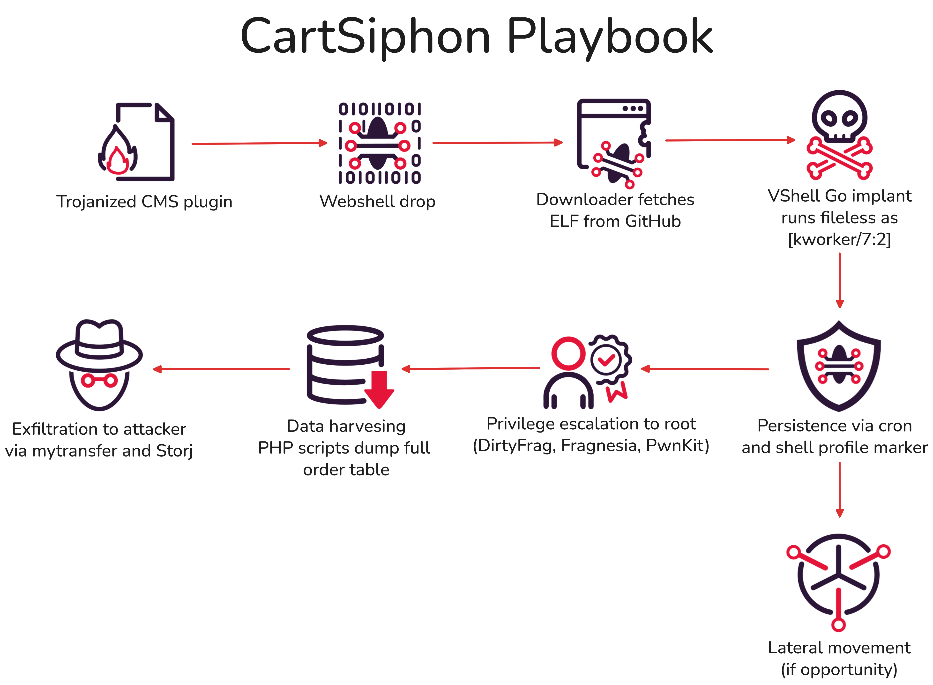
Figure 1 – The CartSiphon Playbook
We monitored the attackers live for three and a half weeks – checking the repo each day and logging changes as they pushed it.
Then on 11/09/2026 they deleted their entire GitHub account. The dwon repo, the account itself, and all three forks returned a clean 404 with no suspension notice, which points to the actor self-deleting their account.
Figure 2 – GitHub account deletion throws a 404.
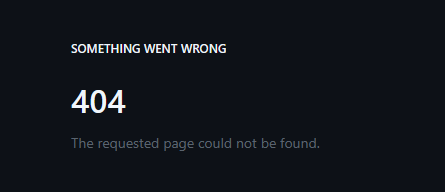
The likely trigger is GitHub’s own traffic panel: it would have shown the repo’s clone count climbing as a result of outside visitors, and since every tool in the kit is disposable and re-deployable elsewhere, the cheapest response is to tear the account down and move on.
The operator will likely resurface as the tradecraft is too well-developed to abandon. We got the mirror clone out (171 MB, 234 commits, every binary blob) before the takedown, so what follows is a complete post-mortem on a live operation that has now gone quiet – and a set of detection signatures for when it comes back 🙂
This writeup is the case walkthrough plus what three-and-a-half weeks of watching the operator produced before they went dark: their kernel-LPE tier, their Chinese-market anti-WAF PHP layer, and an accidental leak of their own Windows workstation OPSEC.
How the intrusion looked from the victim’s side
Reconstructing the attack from the remaining artefacts gives us the following chain:
- Initial access via a booby-trapped OpenCart plugin (“google_all”, from a third-party marketplace). The attacker dropped a small PHP loader, then triggered it.
- Header-triggered PHP loaders that read a hex-encoded payload out of an HTTP header and pipe it through to `Create_Function()`. So there is nothing to grep on disk for.
- A downloader writes itself into /home/<victim>/watchdog/.runtime/ and fetches an architecture-specific ELF from `github.com/gitcmaster/dwon`. This is the discovery that unlocked the whole investigation for us.
- The downloaded binary is a Go VShell implant named `php-fpmc` which runs fileless, deletes itself from disk after launching, and renames its own process to “[kworker/7:2]”, so it appears in ps as a Linux kernel thread.
- Persistence via a cron pair (@reboot and */5 * * * *) and a shell-profile marker (# >>> WATCHDOG AUTOSTART BEGIN >>>). It’s designed to keep coming back, even after an administrator believes it has been removed.
- Anti-forensics – “HISTFILE=/tmp/.del” to suppress shell history, and mtime backdating (~6 years) intended to make the compromise look older, quieter, and harder to reconstruct during incident response.
- C2 over websocket > TLS > TCP fallback at “/agentws”, PSK authenticated, ChaCha20 encrypted. Nothing exotic, just a well-engineered communications channel that is difficult to distinguish from normal HTTPS traffic.
- Exfiltration via reload.php, a controller placed in “catalog/controller/common/” that runs an unauthenticated `SELECT * FROM oc_order` and returns the result as JSON, turning the order database into something the operator can download on demand.
By the time DART arrived, the PHP files were gone. What remained were a couple of Cloudflare hosted subdomains, a partial VirusTotal fingerprint for the implant, and the threat actor’s GitHub repo. So, we started there.
The threat actor’s GitHub
The repo lives at hxxps://github[.]com/gitcmaster/dwon.
Figure 3 – The actor’s GitHub
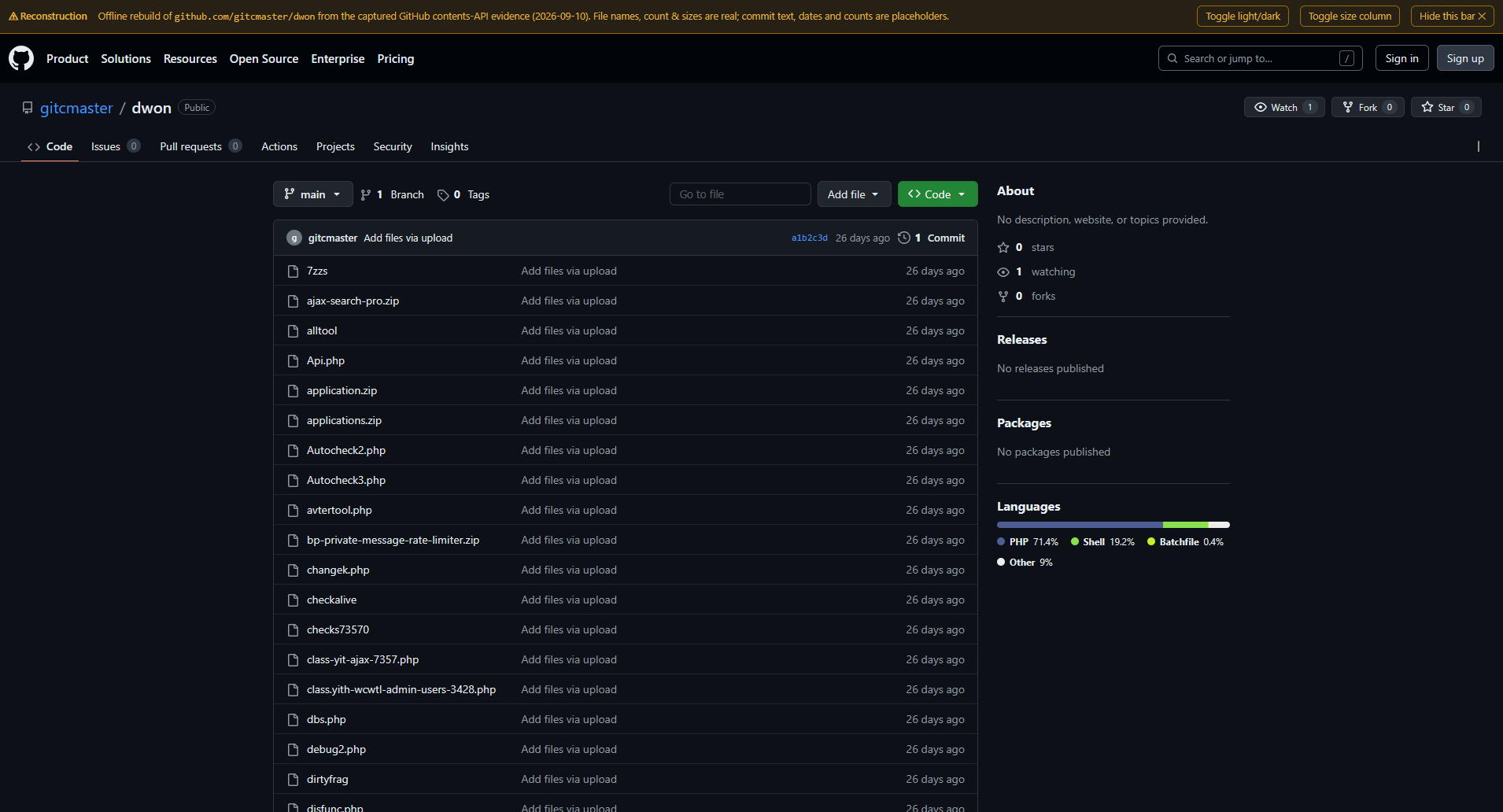
At the time of the initial engagement, the repo was active and serving malicious binaries, spanning:
- Nine multi-architecture VShell clients and downloaders
- Roughly 25 PHP files, webshells, database managers, exporters, and RCE backdoors
- 14 trojanized plugin archives spanning both OpenCart and WordPress/WooCommerce names
- A handful of ancillary offensive tools (myscan, dirtyfrag, alltool, checkalive)
- Windows .bat scripts implying a PE build target too
The find was an entire operator toolchain sitting in public on GitHub. The account “gitcmaster”, created 17/06/2025, held four repositories. One was “dwon”, the live payload repo. The other three were forks that map neatly onto an intrusion workflow: an exploit collection, a proof-of-concept for the CVE-2025-53770 SharePoint “ToolShell” RCE, and udp2raw, a tunnelling tool that disguises traffic as fake TCP/ICMP to slip past firewalls. Taken together, the four repositories tell you exactly what line of work this operator is in.
Confirming it’s actually the threat actor
Before we could treat the repo as first-party attacker infrastructure we needed a match to the incident that wasn’t circumstantial. Two matched:
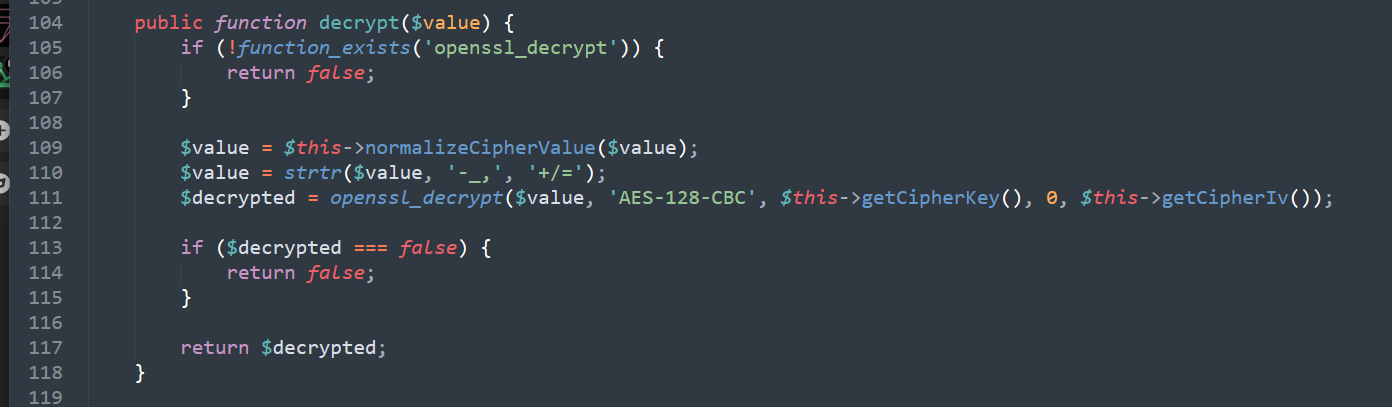
- The op5captcha.php backdoor recovered from the victim used AES-128-CBC where the key was derived from the literal string DF354JS. The repo’s copy of op5captcha.php contains a hardcoded const SECRET_KEY = ‘DF354JS’; with an identical scheme. A very rare coincidence. Too rare in fact.
- The client’s php-fpmc implant is recorded on VirusTotal under the filename ws80-op-client, which is a filename present in the repo
Figure 4 – The hardcoded secret key
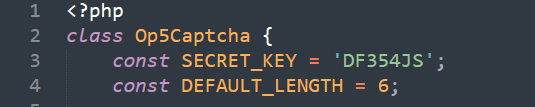
Figure 5 – The AES-128-CBC decrypt
Recovering the exact breach-time binaries from git history
The most useful thing about a Git-hosted toolkit is that Git preserves everything. Even when the operator rotates their live payload, a full git rev-list –all –objects walk gave us the entire payload history: 71 unique ELF payloads across the 234 commits, and matches on the two IOCs.
| SHA-256 | Repo path | Type | Role |
| 1f3c5ded26318af42ae3c9f34944c32058
c89bcd7d5557f8002bc1b01c82520c |
ws80-op-client | ELF-64, 8.0MB | php-fpmc – the VShell implant |
| 20e766090c037e6abc82cd4011811fda35
d0b966bbd5625b4658ef6afc3b98c4 |
ws80-down-11 | ELF-64, 5.6MB | watchdogd – the downloader |
Both are statically linked, stripped Go binaries with the build info scrubbed.
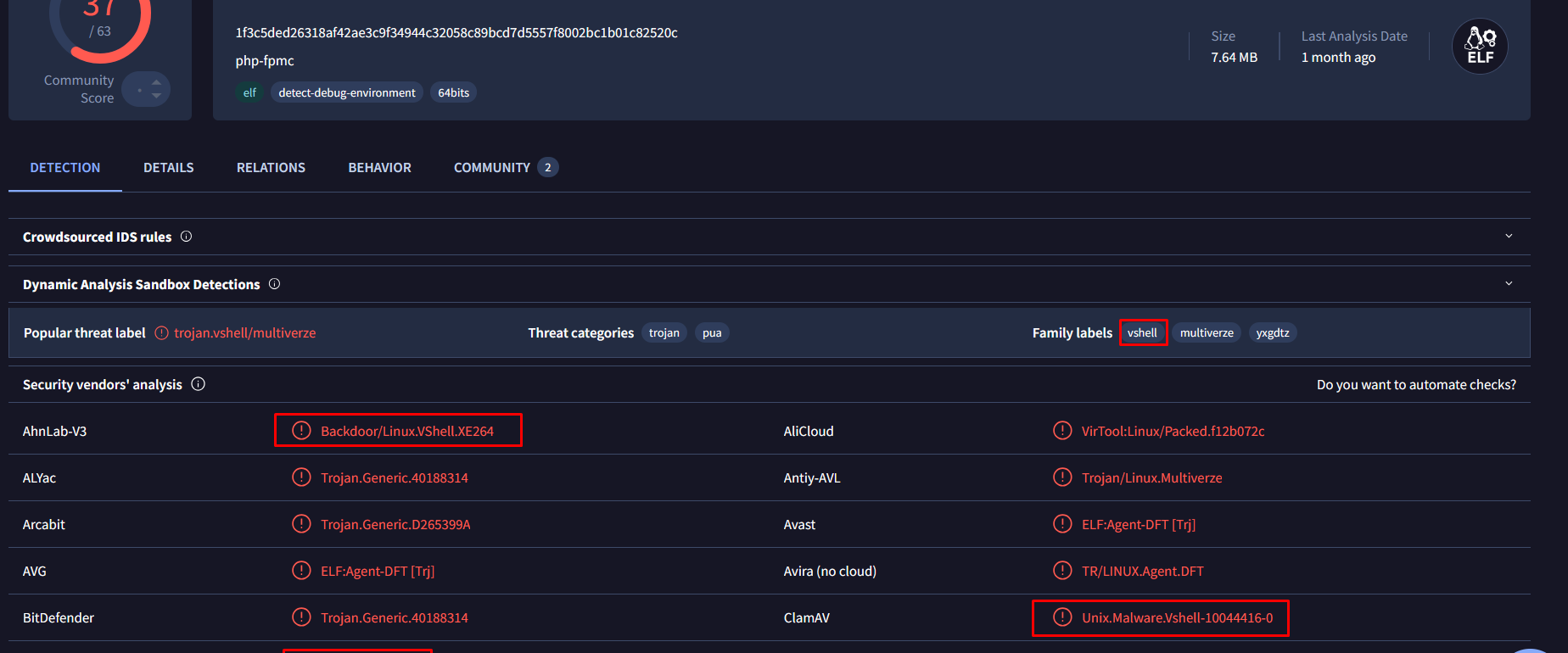
The VShell family classification of what hit our victim is anchored on three independent lines of evidence: the recovered ws80-op-client binary was already on VirusTotal, first submitted 20/04/2026, three months before our incident, and 20+ AV vendors had already labelled it “trojan.vshell/multiverse” at that point; the binary we recovered from git carries stock VShell framework strings; and the “[kworker/7:2]” process masquerade observed by DART on the compromised host is a documented VShell fingerprint.
Figure 6 – php-fpmc labelled as VShell on VirusTotal
These binaries couldn’t be recovered from the victim; they were deleted from disk and ran fileless from memory. The public repo history helped solve that.
The C2 map, extracted from the binaries themselves
Both breach binaries embed their operational configuration as plaintext strings – the operator rotates the whole binary very often, so I guess string-obfuscation isn’t worth the effort to them. We obtained three distinct C2 domains extracted from the binaries:
| Domain | Resolves to | Hosting (ASN) | Used by | Notes |
| wssendlog.work.gd | 96.126.130.107 | Evoxt (AS149440) – Japan | watchdogd beacon | C2 endpoint |
| gittest.work.gd | 172.111.146.141 (old)
130.94.65.163 (new) |
Latitude.sh (AS396356) – Japan | ws80-op-client / pskclient | VT 4/91 on the domain |
| jic2.work.gd | 50.114.177.151 | Baxet Group (AS26383) – Canada | ji-client family | same AS as the incident C2 |
The IR-confirmed C2 “89.125.244.131” is also on Baxet AS26383**; two** C2 endpoints on the same niche provider are an infrastructure cluster indicator. Every C2 domain uses free dynamic-DNS (*.work.gd, *.linkpc.net) fronting commodity VPS hosting, cheap, disposable, and rotated fast.
The webshells and data-access layer
The PHP side is roughly 25 files. The ones that matter:
- php – unauthenticated oc_order exporter. Runs SELECT, returns JSON. This is the exfiltration primitive.
- php / wpdbs.php – Adminer-based database managers with an SQL Console. Queries are submitted encrypted, so they never appear in server-access logs.
- php – WooCommerce order exporter. The WordPress-side analogue of reload.php, this is why the operation is cross-CMS.
- php / autocheck.php – header-triggered webshells reading hex-encoded payloads from HTTP_TUP and executing via Create_Function(). Nothing on disk.
- php – disable_functions bypass probe, iterating through every PHP execution primitive to find one that isn’t blocked.
The whole stack is purpose-built for customer-PII harvesting from e-commerce databases.
What was CartSiphon actually trying to do?
Each thread in the chain boils down to one goal: exfiltrate customer PII at scale from e-commerce storefronts, then sell it. Every other tool in the kit including the VShell C2, kernel exploits, encrypted SQL shell, and anti-WAF PHP utilities exists to support PII harvesting operations – not to mention the entire persona separation/hiding mechanism and even the BitLocker workfolders which suggest an operator investing considerable effort into protecting a business built around stolen data.
Figure 7 – Recent order exporting function in `oinfo.php ` – the same procedure used across other compromised CMSs
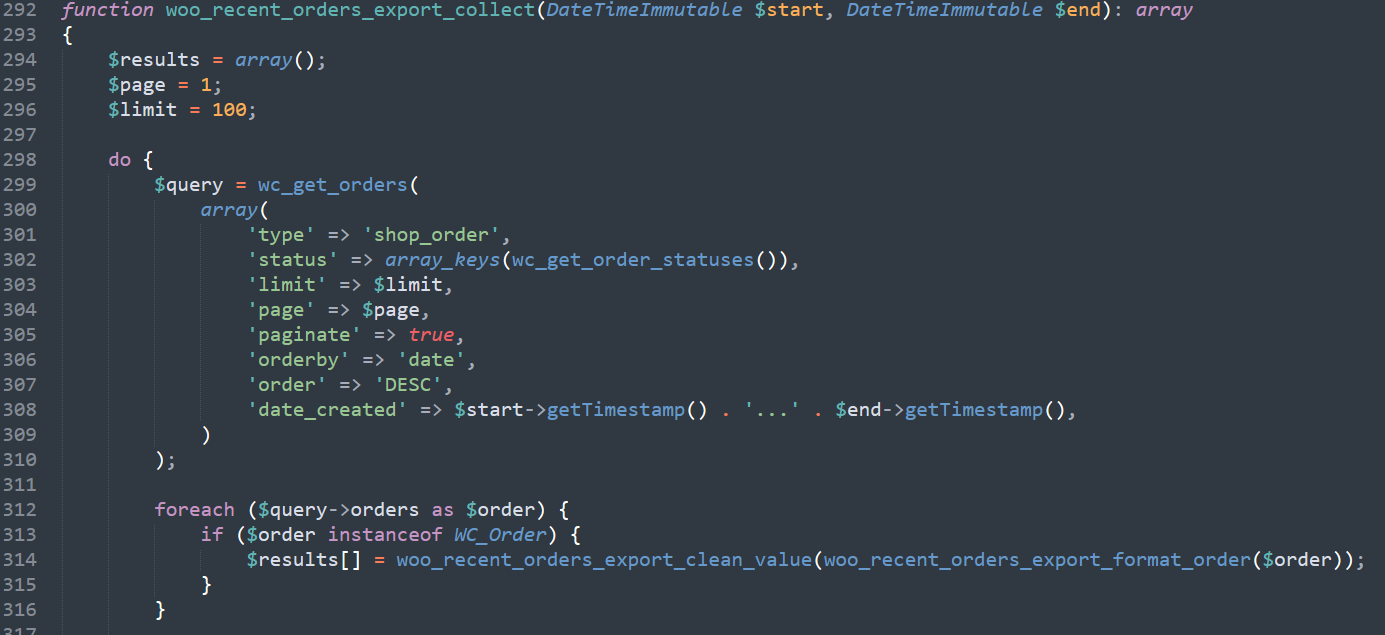
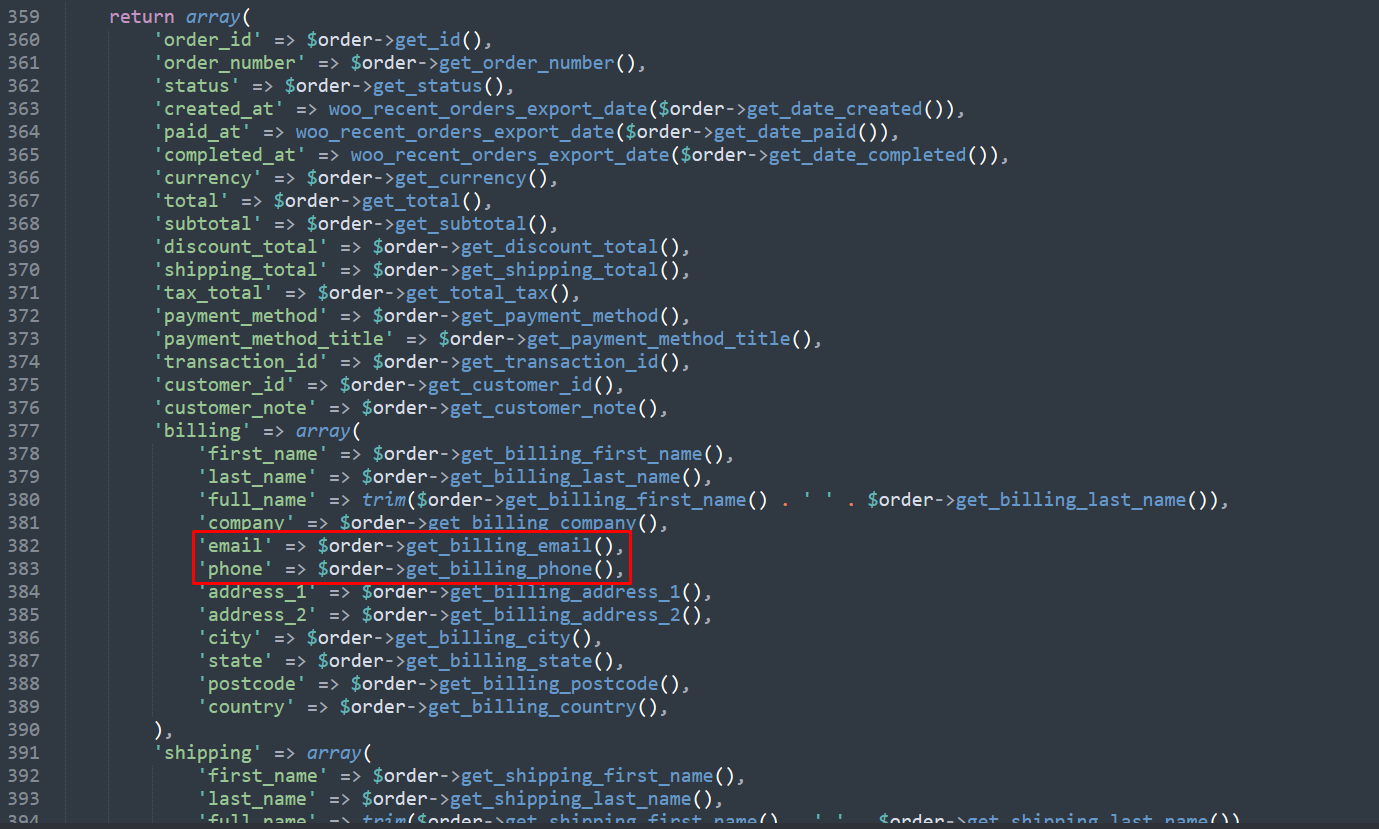
Figure 8 – Exfiltration of billing information
Now we can follow the chain of exfiltration from start to finish.
“mytransfer”, a 7.3 MB UPX-packed Go binary in HEAD, is a command-line uploader that supports three cloud storage services:
- Storj decentralized cloud storage,
- Amazon S3 (including amazonaws.com.cn for users targeting AWS China)
- Google Cloud Storage.
Storj is a big clue because, as they tell you in all their marketing copy, it’s an entirely decentralised system. Files uploaded to Storj are encrypted client-side, split into chunks with erasure coding, then spread across thousands of participating storage nodes spread over dozens of countries. This isn’t some Mega analogue. No single operator can decrypt your data; no single subpoena can claim it or freeze it; and no single government can order it taken down.
The AWS and GCS components are almost certainly backups/regional variants. The user runs reload.php (or oinfo.php) to extract the order database table. They pipe that through mytransfer, at which point the stolen PII is spread across a system architected specifically to resist seizure attempts. That’s a lot more effective than “download your database to the VPS and scp/rsync it to your home server” that most other e-commerce cybercrime groups will do.
The scale of what the actor gets out of each hacked store has some real value. For example, a row from oc_order, or WordPress/WooCommerce equivalent, can include:
customer name, email address, phone number, billing address, shipping address, payment method (incl. sometimes filled payment tokens), date of purchase, purchase amount, IP address used during purchase, shipping reference (highly common).
Individual order-form data is worth more than creds because there are physical addresses attached, recorded purchase behaviour, and actual verified identities. Breached payment card data gets validated by the issuing bank’s fraud department; order data has already been through that plus the merchant’s payment gateway, and fraudsters can take advantage of this data.
What happens to the data next?
We know CartSiphon extracts customer order data and how its tooling can move that data off compromised infrastructure, but our visibility ends at exfiltration.
While we have not observed the operator selling or otherwise monetising it, there are well-established criminal markets for comparable stolen PII. Research into underground markets has documented stolen personal information being advertised and traded through forums, marketplaces, shops and messaging platforms, where it can subsequently support other forms of fraud.
Figure 9 – Stolen data being sold on an underground Russian hacking forum
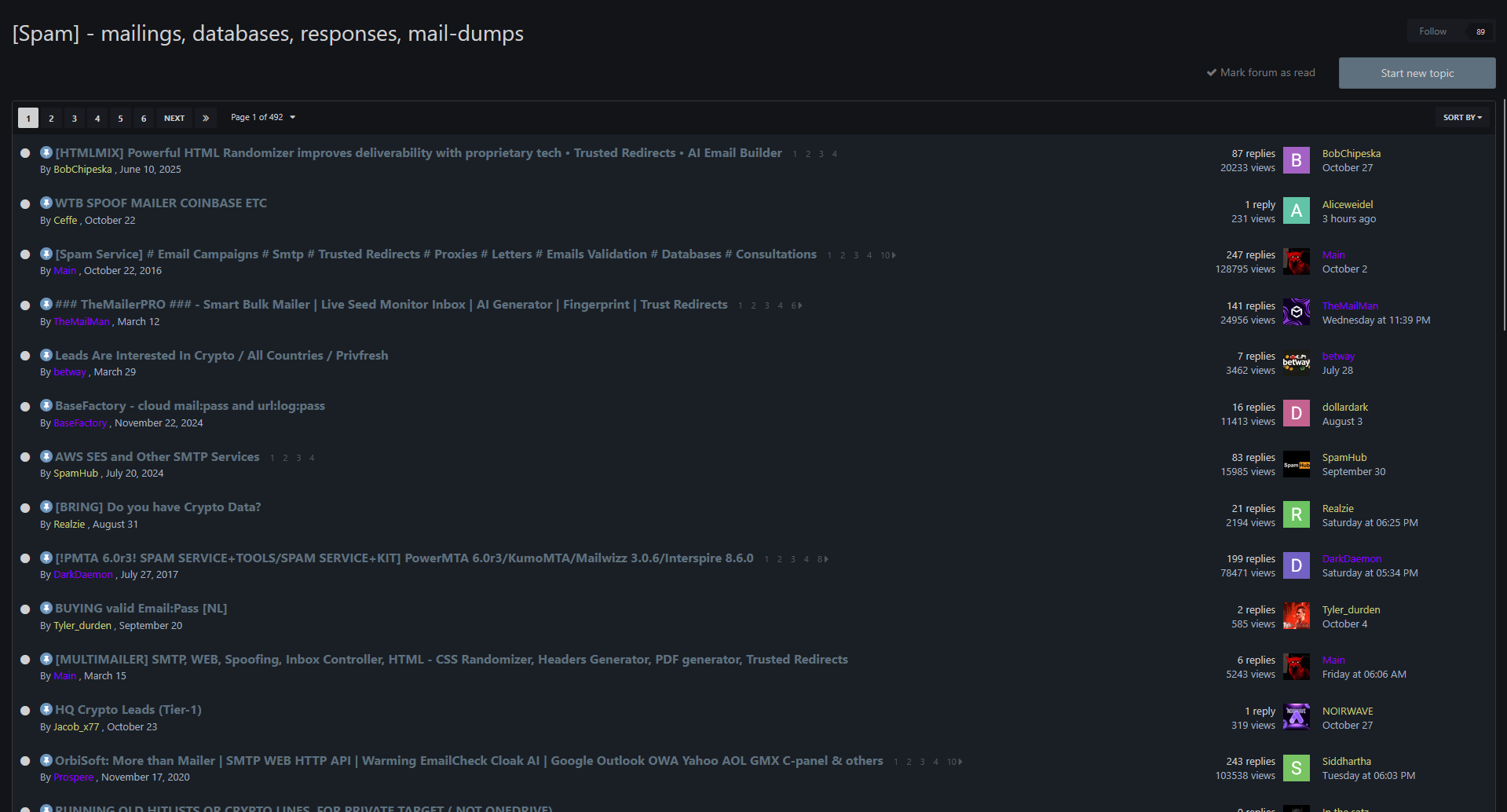
This gives us several plausible routes through which data of this kind could ultimately be monetised:
- Resale of stolen customer data. Packaging and selling order data into “shop” bundles branded with the merchant’s name through criminal forums and marketplaces is the most profitable usage. The value of individual records can vary depending on age, completeness of the data or whether usable payment information is included. Typically, attackers could fetch $2-20/record depending on age/stolen payment tokens. 50k orders from a medium-sized storefront is a six-figure payday.
- Targeted phishing. Genuine order data gives criminals particularly useful context: knowing that someone actually bought a McDonalds or a new laptop allows phishing and social-engineering lures to reference real purchases, making them far more convincing than generic approaches.
- Refund and chargeback fraud. Use the stolen identity and order information to file a “didn’t receive my merchandise” claim and game the refund process.
- Building more complete identity profiles. Email addresses, telephone numbers and billing addresses become more useful when combined with information from other breaches, allowing criminals to assemble richer profiles of individual victims.
- Direct payment fraud. This is the higher-effort option. Where the merchant stores usable payment information or tokens, the operator does have the PII and the payment-related data needed to potentially facilitate card-not-present fraud.
Unlike banks with mature security controls or software companies whose databases may not contain the same commercially useful customer and transaction data, mid-sized e-commerce businesses are an ideal target for this data-theft model. They often run standard CMSs with extensive third-party plugin ecosystems, may lack dedicated security functions, and can hold rich customer PII in readily accessible databases.
Our assessment of what CartSiphon can do beyond the initial PII grab is not purely hypothetical. The kernel-LPE tooling recovered from the operator’s repository shows they have built in the option to escalate further on a compromised host.
CartSiphon’s kernel-LPE tier
Root on the box gives them kernel-level persistence, log tampering below the reach of the PHP webshells, and the ability to pivot within shared hosting if the victim is on multi-tenant infrastructure. That’s the option to escalate that turns opportunistic mass compromise into targeted follow-up on the highest-value victims.
We can see that this webshell can dump the orders table. On the repo, we see two small ELF binaries. Both were staged by CartSiphon, and they are exploits for two Linux kernel CVEs for local privilege escalation in 2026:
- “Dirty Frag” (CVE-2026-43284): Linux kernel LPE via xfrm-ESP and RxRPC receive path. This bug triggers when an unprivileged process tries to decrypt data over paged buffers (not owned by kernel) which results in a write primitive leaking to the page cache.
- “Fragnesia” (CVE-2026-46300): XFRM ESP-in-TCP LPE. An unprivileged process can now overwrite page cache of readable files, e.g. /usr/bin/su.
The naming is obvious, the operator adopts the vulnerabilities’ public nicknames (“Dirty Frag”, “Fragnesia”) straight onto the binary filenames… With the CVE number appended in Fragnesia’s case. Not doing a very good job of hiding their intentions.
The toolkit’s post-compromise story also includes “alltool”, a 23.8 MB Golang multi-tool bundle that packages tools like ffuf, frp, nps, xray, nmap, socks5 proxy, SMB, Kerberos, LDAP, WinRM, and chisel tunnel capabilities into a single binary. This is the operator’s post-compromise lateral-movement and network-exploration toolkit, and the fact it is found alongside the LPE tools tells us CartSiphon’s operational plan doesn’t stop at root on the web host. They most likely intend to pivot deeper into the victim’s network if the opportunity is there.
Attribution
We grade each attribution finding by confidence and distinguish observed evidence from analytical assessment.
Operator identities
All 234 commits at the time of the August cut split cleanly between these two identities:
- “[email protected]” – used for “Add files via upload” commits, i.e. tool uploads
- “[email protected]” – used for “Delete” / “Create/Update *_hash” commits, i.e. housekeeping
- Both are privacy-focused mail providers, and there is a clear pattern here – one identity ships payloads, one identity manages the repo. This could be two operators or one operator with two configured git identities. Either way, this is a discipline signal: the operator has separated a “publish” persona from a “manage” persona.
Graded assessment: High confidence that these are the Git committer identities; low confidence that either corresponds to a real-world individual.
Timezone
Across all 234 commits, activity runs 00:00-16:00 UTC with a clean dead zone 16:00-24:00 UTC (zero commits in that band), peaking at 06:00, 02:00, and 08:00 UTC.
That dead zone is roughly 00:00-08:00 in UTC+8 – the operator’s sleep hours. Commits run through weekends, heavily on Saturdays and Fridays. This is a full-time operator on an East/Southeast-Asian schedule (UTC+7/+8).
Graded assessment: Medium confidence that the observed working pattern is consistent with an operator based in an East or Southeast Asian UTC+7/+8 timezone.
Language signal – Chinese-speaking operator
- VShell is a Chinese-origin post-exploitation C2 framework whose management console is natively Mandarin, popular in Chinese-speaking offensive threat groups.
- Native-fluent Chinese comments in eight operator files –
- The two shell loaders, five PHP tools with 87 Chinese phrases total.
tar.php with 131 Chinese phrases.
Plus filename semantics on tebink.php and changek.php), and the two Windows batch scripts we discuss below. - debug2.php names its evasion targets in its own header comment – “单文件PHP文件管理器 – 免杀增强版 · 采用多层混淆与动态执行技术,绕过主流WAF(安全狗/云锁/宝塔等)” – an “anti-AV enhanced version” file manager designed to bypass SafeDog (安全狗) / YunSuo (云锁) / BaotaPanel (宝塔), three Chinese-market WAF and hosting-control-panel products.
- A repo tool named tiquan — pinyin for 提权 (privilege escalation).
- Strings embedded in the client binaries reference oss-cloudbox and oss-go-temp – Alibaba Cloud OSS naming.
Graded assessment: Medium–high confidence that the operator is Chinese-speaking, based on extensive Chinese-language material and references to Chinese-market security tooling.
Operator Windows machine leak signal
The one thing every professional threat actor learns to keep out of their public attack-tooling repo is anything about their own machine.
CartSiphon mostly does that; nothing in the 234 commits identifies the operator’s git working directory, their username, their build machine, or their local network. Two files in HEAD are the exception, and they’re the sort of exception that shouldn’t happen twice: startX.bat and stopX.bat are the operator’s personal Windows scripts for mounting and unlocking an encrypted VHDX. Not attack tooling. Personal workstation plumbing.
Full content, startX.bat:
- @echo off
:: 挂载 VHDX 并解锁 BitLocker - :: DiskPart 挂载
(echo select vdisk file=”C:\secure\secret.vhdx”
echo attach vdisk) | diskpart - :: 解锁 BitLocker
manage-bde -unlock X: -password - :: 打开资源管理器
explorer X:\
And “stopX.bat” (locks, detaches, has a commented-out backup line to D:\backup\). The Chinese comments “挂载 VHDX 并解锁 BitLocker” / “锁定 BitLocker” – mount/lock BitLocker, these are the operator’s own working notes for themselves.
Graded assessment: High confidence that these files expose details of a Windows working environment used by the operator, rather than victim-side tooling. They provide a rare glimpse of how the operator protects and manages their own working files.
What we learn from this
- The operator runs Windows locally: Every piece of their attack tooling targets Linux; the workstation orchestrating it does not
- They keep sensitive work on an encrypted VHDX: at C:\secure\secret.vhdx, mounted to drive X:
- The BitLocker password is interactive, not stored on disk. manage-bde -unlock X: -password prompts at runtime.
- A backup routine exists, dormant in the commented rem xcopy /y D:\secure\secret.vhdx D:\backup\secret_backup_<date>.vhdx. Two-drive workstation (C:, D:), primary and rotating backup.
It doesn’t hand us the key to their workspace, but any future evidence with C:\secure\secret.vhdx present would be an immediate CartSiphon attribution vector.
Based on this intelligence, we attribute CartSiphon to a Chinese-speaking, financially motivated threat cluster that has remained active until mid-September. Since the deletion of the GitHub account there has been no further observed activity as of 1st October.
Where CartSiphon sits in the VShell ecosystem
VShell is a Go-based multi-platform post-exploitation C2 framework – Linux ELF and Windows PE, both compiled from the same Go source tree. It’s not a PHP webshell (which is a common confusion), but an implant framework with a native Mandarin management console. All its features are stock features that came with the framework itself, not custom built by any operator using it.NVISO, in a November 2025 investigation, uncovered more than 1,500 active VShell servers. Malpedia’s win.vshell family entry currently attributes the named clusters as VShell users:
| Cluster | Named by | Motivation | Targets |
| UNC5174 | Mandiant / sysdig | State-aligned / mixed-purpose | Government, research & education |
| Earth Lamia | Trend Micro | Espionage / unresolved Mimic ransomware activity | Asian targets |
| UAT-8302 | Cisco Talos | Espionage | Government |
| Shadow-Earth-054 | Trend Micro | Espionage | Government, telecom |
The framework’s total observed footprint (1,500+ servers) is clearly large, so there are most likely more unattributed clusters also operating VShell instances, possibly focusing more on the financial gain, like the incident we have gone over in this report.
Three and a half weeks monitoring the operation
We monitored the repo for three and a half weeks after an initial report – the operator pushed 37 more commits across 11 days with the same email and UTC+8 schedule.
- New tooling was observed, including two shell scripts, one called `psk_agent.sh` that was the initial loader. Its job is to find writable+executable directories, download `pskdown` from GitHub via a curl > wget > Python fallback chain. The other is `psk_replace_downer.sh`, which is a fleet-upgrade script for hosts that are already compromised.
- Another CVE was also observed. Static analysis of a binary called `checks73570` showed that it was targeting CVE-2026-73570 (a Zimbra Collaboration Suite pre-auth RCE via SNMP notification processing). This is interesting because the `checks73570` binary is a dedicated exploitation and webshell deployer tool, strings include “CVE-2026-73570”, “[+] webshell”, and “[+] STARTTLS”. This is the third CVE exploit in the toolkit alongside the two kernel-LPE tools which targets a completely different attack surface: server-side mail infrastructure. This gives us a bit more of an insight into CartSiphon’s operations. They aren’t limited to CMS-plugin initial access and they can also target Zimbra mail servers directly.
- Static analysis on the two newest binaries told us about CartSiphon’s exfiltration channel. The `mytransfer` was the main reveal. wIt is a Storj / S3 / GCS multi-cloud upload client, which answers “where does the stolen PII go after `reload.php` extracts it?”. The unpacked binary contains `storj://` URI schemes and upload paths for s3.amazonaws.com / amazonaws.com.cn / Google Cloud Storage. Storj is a decentralized storage network – data is sharded, encrypted, and distributed across thousands of independent nodes. This is the exfiltration channel a threat group would use if they’d thought about data seizures and wanted its stolen PII to be unreachable to law enforcement.
On the other hand, the`priv` binary is a PwnKit-like SUID exploitation tool, which was garble-obfuscated at the Go source level. But despite the obfuscation, the unpacked strings reveal “pwnkit-, /pwn.so, stage2, setuid, setgid, evil%d, exploit”. This is a portable Linux LPE targeting the PwnKit exploitation pattern (CVE-2021-4034, for example).
What this changes for defenders
CartSiphon’s case demonstrates the compounding effect of “small” evasion choices:
- [kworker/7:2] process masquerade
- GitHub as payload host means the detection has to be outbound C2 behaviour
- Encrypted SQL console defeats access-log evidence. Detection has to be behavioural PHP telemetry
- Binary rotation faster than AV can index means hash-blocklists don’t work.
- Masquerading as sophosv / modsecuritys / watchdogd / .containerd.download-*
- Kernel-LPE tooling in the operator’s toolkit changes the IR response. Given the operator’s tooling, the cleanup moves from “remove webshells and rotate creds” to “re-image, restore, and rotate every secret that is reachable from the host”
- CVE-2026-73570 Zimbra RCE exploitation alongside the CMS-plugin vector means organisations that don’t run WooCommerce or OpenCart are in scope if they run Zimbra
- The exfil destination is Storj decentralized storage with S3/GCS fallbacks. This is one of the easier detections. Legitimate e-commerce platforms have no reason to talk to decentralized storage like Storj, so the detection focus remains on the S3/GCS fallbacks.
- The `alltool` binary gives the operator internal lateral movement capability beyond initial compromise of the web host.
For the specific case of e-commerce operators running OpenCart or WooCommerce, the concrete asks are simple: any third-party plugin from an unofficial marketplace is a live attack-surface expansion, and an unauthenticated PHP file returning JSON that includes fields like email or phone is, by definition, a data-exposure primitive.
And it is worth remembering the scale this sits inside: with NVISO counting more than 1,500 active VShell servers in late 2025, a cluster like CartSiphon is very unlikely to be the only financially motivated operator on the framework, just the first to be named.
Acknowledgements
Thanks to JUMPSEC’s DART for the incident response work this research is built on, and to Muhammed Jawad for the IOCs that anchored the analysis.
Indicators of Compromise
File Hashes (SHA-256): Breach-era binaries
| Hash | Description | VT |
| 1f3c5ded26318af42ae3c9f34944c32058c89bcd7d5557f8002bc1b01c82520c | php-fpmc VShell implant (breach; = ws80-op-client) | 37/76 |
| 20e766090c037e6abc82cd4011811fda35d0b966bbd5625b4658ef6afc3b98c4 | watchdogd downloader (breach; = ws80-down-11) | 22/75 |
| 2e65e6a3a55d3d784c9a644d5f7b441e250588624a66bc75273dd37d6799ac97 | reload.php unauthenticated oc_order export | 0/n/a |
File Hashes (SHA-256): Kernel-LPE tooling (in HEAD)
| Hash | Description | VT |
| 41da0feb53523495a584f8290c95a7d365e2e72ff61be5fbb4116292d5524dfd | dirtyfrag: CVE-2026-43284 “Dirty Frag” LPE exploit, UPX-packed | 4/64 (trojan.dirtyfrag) |
| c82d2a5080351e90330195d9014cfefe808207f6ea82653a0c1306b95b23884d | Fragnesia46300: CVE-2026-46300 “Fragnesia” LPE exploit | 28/64 (trojan.expl/usblfj26) |
File Hashes (SHA-256): Current rotated toolkit (HEAD as of 2026-09-10)
| Hash | Description | VT |
| 0e68837a3f4ff6ec93dd0b9cc3fe418e3e2b6861775c5aa5261deacdaad5a3a2 | ws80-op-client current build | 0/n/a |
| 137684daaa19f57d43a3ba6f4d4ef8525a387c1806fab3d64f3440a9c6700870 | ws80-op-client-arm current build | 0/n/a |
| 23dfffe18a3a4f3915c163b5e21bb38c31077093fcd76e9063bb3ae9cd055803 | ws80-down-11 current build (distinct from breach-era 20e766…) | 0/n/a |
| 89c5a4d8094cce900083acdc7cd36f49613eee9ca38d55166cf2a861fc062151 | pskclient Sep rotation | 0/n/a |
| 5eb9790f4af9fd0adeeff98c962e0a41badd4d90c5b2095fb329d8596dc6609a | pskdown current downloader | 0/n/a |
| efbd9ca359d92ae81dea2d2b22f4e434687fb41ee6c60cfce9c87c0576a66c8a | ji-client (older VShell client family, bound to jic2.work.gd) | 0/n/a |
| a919224f90438a787997535edac4e7767307066bf8dd5633a3a07c40681f0099 | ji-down-11 older downloader | 0/n/a |
| 556781d0333bc9ac5609b34eaed34aae26cdfa31f1e371cae6cfef76f6c9fc3e | ws80-op-down-arm ARM downloader | 0/n/a |
| 0fdb1f4a661cf51760dd261819a01b4958d1295100d5622b7ae16ee41bbab2a6 | mytransfer: Storj/S3/GCS multi-cloud exfil client (UPX-packed) | 0/n/a |
| 299298af4a9b3eb3d6f8e407b45e52173567fd32cf553a8ae3df983d06963e91 | priv: PwnKit-style SUID LPE (garble-obfuscated Go) | 0/n/a |
| 3703ccfc4f34fc450733e102f72c0a527529f693e6f93be4841f5d35e98e1262 | tiquan (提权, privesc tool) | 0/n/a |
| 43cfeea24636e5955ea58431175d596b58cf434c8c65413434d2688f5583426c | m4a.php hex-obfuscated PHP file manager | 0/n/a |
| e0d3b94ce3cbf8703aa60621ba3335682c90176d528cc2a0dbdecfb01b3f21d7 | myscan port scanner | 0/n/a |
| a9121d13c5eb32ad660b5611d869ec593b65f690aa6432ea0d389e86f015b05a | alltool: offensive multi-tool bundle (ffuf/frp/nps/xray/nmap/socks5/SMB/Kerberos/LDAP/WinRM/chisel) | 0/n/a |
| 2fced1f07f997c979a9e219d497062b5a16f2c905af0eee0721ba0663d641987 | checks73570: CVE-2026-73570 Zimbra RCE + webshell deployer | 0/n/a |
File Hashes: Not malicious (do not blocklist on hash alone)
| Hash | Description | VT |
| b38001aa01f6b609d1fab3361369b8bfad417a2ad51b8f4fa9b4d558b9715dc1 | 7zzs: unmodified 7-Zip v24.03 Linux static build; carried by CartSiphon as an archive-handling utility but not itself malicious | 0/65 |
IP Addresses
| Indicator | Description |
| 89.125.244[.]131 | Established VShell C2 (Baxet AS26383, JP; ThreatFox entry aged out in Sep 2026, still live) |
| 103.115.17[.]173 | NEW: VShell C2, Baxet AS26383, geo CN (Jiangan District Wuhan, per whois). Passive DNS shows sleximai[.]linkpc[.]net resolves here 2025-09. Recycled from unrelated 2020 use. |
| 50.114.177[.]151 | jic2.work.gd C2 (Baxet AS26383, CA; on ThreatFox as VShell C2, added independently 2026-08-22) |
| 96.126.130[.]107 | wssendlog.work.gd C2 WebSocket beacon (Evoxt AS149440, JP) |
| 130.94.65[.]163 | gittest.work.gd current A record (Light Node Limited AS154177, JP; rotated 2026-09 from Latitude.sh 172.111.146[.]141) |
| 38.89.142[.]244 | google_all exploitation source (Ultahost AS44259, SG) |
| 34.95.113[.]255 | Attacker egress / VM (Google Cloud, US) |
Domains
| Indicator | Description |
| wssendlog[.]work[.]gd | watchdogd beacon domain |
| gittest[.]work[.]gd | ws80-op-client / pskclient C2 domain |
| jic2[.]work[.]gd | ji-client C2 domain |
| sleximai[.]linkpc[.]net | Co-hosted attacker domain (resolves to both 89.125.244.131 and 103.115.17.173) |
| justhost[.]gaoshiboy[.]us[.]ci | NEW: fourth attacker domain, resolved to 89.125.244[.]131 2026-03 |
| abc123[.]dnslog[.]cn | Zimbra exploit OOB verification callback (CVE-2026-73570) |
URLs and Accounts
| Indicator | Description |
| hxxps://github[.]com/gitcmaster/dwon/raw/refs/heads/main/pskdown | Current initial-loader payload URL |
| hxxps://github[.]com/gitcmaster/dwon/raw/refs/heads/main/ws80-op-client | Alternate payload URL (breach-era) |
| github[.]com/gitcmaster/dwon · account gitcmaster (id 216723320) | Attacker toolkit repository / account |
Operator Identifiers
| Indicator | Description |
| [email protected] | Git author (payload uploads) |
| [email protected] | Git author (housekeeping / hash updates) |
| gitcmaster | GitHub handle (account created 2025-06-17) |
Host Artefacts: Linux Victim
| Indicator | Description |
| /home/<victim>/watchdog/.runtime/watchdogd | Install path |
| /home/.containerd.download-140272978 | NEW: Docker/containerd masquerade downloader drop |
| php-fpmc | Fileless VShell (deleted, ran from memory) |
| [kworker/7:2] / [kworker/0:2] | Spoofed kernel-thread process names |
| sophosv | Masquerade name (Sophos AV cover) |
| modsecuritys | Masquerade name (ModSecurity WAF cover) |
| chi_client | NEW: client-name family (from 2026-09-10 VT similar-files) |
| HISTFILE=/tmp/.del | Command-history suppression |
| mtime backdated ~6 years | Timestomping |
Host Artefacts: Operator’s Windows Workstation (leaked via startX.bat/stopX.bat)
| Indicator | Description |
| C:\secure\secret.vhdx | Operator’s BitLocker-encrypted VHDX workspace |
| X: | Drive letter the VHDX mounts to |
| D:\secure\secret.vhdx / D:\backup\ | Dormant backup path (commented xcopy in stopX.bat) |
Persistence
| Mechanism | Indicator |
| cron | @reboot root %s |
| cron | */5 * * * * root %s |
| Shell profile | # >>> WATCHDOG AUTOSTART BEGIN >>> |
| at fallback | at -M now + N minutes |
Webshells / Data-Access
| File | Description |
| catalog/controller/common/reload.php | Unauthenticated oc_order export |
| catalog/controller/api/autocheck.php | Hardcoded auth token (sha256): 42cf744e378afce4d4475d9ca3c3a05638ace836bc6f9afa4c1e3bf2296b7ae5 |
| system/library/op5captcha.php | RCE, key = ‘DF354JS’; AES-128-CBC with key = substr(md5(‘DF354JS’), 0, 16), iv = substr(sha1(‘DF354JS’), 0, 16) |
| opdbs.php / wpdbs.php | Adminer-style DB manager + encrypted SQL console |
| oinfo.php | WooCommerce order exporter (wc_get_orders) |
| Api.php / autocheck.php | HTTP_TUP header-triggered loaders |
| indexu.php | HTTP_THTH disable_functions bypass probe |
| tar.php | Site-source backup tool; include-list snarfs .env credentials files |
| debug2.php | “免杀增强版” anti-AV file manager targeting SafeDog/YunSuo/BaotaPanel |
| tebink.php / m2.php / m4a.php / n6.php | Operator-original obfuscated PHP webshells (base64/pack(‘H*’)/XOR/goto obfuscation) |
| applications.zip / application.zip | Operator’s own shell packages inside plugin-shaped ZIP drops; includes .php7 and .phtml extension-bypass copies of tebink.php / upp.php |
| Op_Captach.zip | Booby-trapped OpenCart captcha plugin drop (deploys op5captcha) |
References:
- OpenCart intrusion and comparable Go C2 tradecraft, KKAA Solutions: https://kbourdakos.gr/articles/ghost-process-go-c2-agent-opencart-breach.html
- Larva-26009 and financially motivated VShell activity, AhnLab ASEC: https://asec.ahnlab.com/en/94685/
- UNC5174 and VShell use within state-aligned initial-access activity, Google Threat Intelligence: https://cloud.google.com/blog/topics/threat-intelligence/initial-access-brokers-exploit-f5-screenconnect
- VShell capabilities, infrastructure and wider threat ecosystem, NVISO: https://blog.nviso.eu/wp-content/uploads/2025/11/VShell.pdf
- Storj decentralised-storage architecture and data distribution, Storj: https://storj.dev/learn/concepts/decentralization
- Dirty Frag Linux kernel privilege escalation (CVE-2026-43284/CVE-2026-43500), Tenable: https://www.tenable.com/blog/dirty-frag-cve-2026-43284-cve-2026-43500-frequently-asked-questions-linux-kernel-lpe
- Fragnesia Linux kernel privilege escalation (CVE-2026-46300), Red Hat: https://access.redhat.com/security/cve/cve-2026-46300
- CVE-2026-73570 exploitation against internet-facing Zimbra servers, Microsoft Security: https://www.microsoft.com/en-us/security/blog/2026/09/30/unauthenticated-command-injection-on-internet-facing-mail-servers-tracking-cve-2026-73570/

Jack Lewis
Research & Analysis
Jack is a security researcher with a strong focus on malware analysis, tracking new threat actors and campaigns, reverse engineering, patch diffing, and proactive threat hunting.