


Executive Summary
JUMPSEC’s Detection and Response Team (DART) recently escalated a phishing email after it reached a client’s inbox despite passing standard email authentication checks. On the surface, this appeared to be another routine phishing campaign with a tax-related pretext and a seemingly unremarkable attachment.
However, rather than delivering malware directly, the operator had constructed a multi-stage execution chain designed to bypass trust mechanisms, abuse trusted software, evade automated analysis, and ultimately deliver a remote access trojan with minimal scrutiny. What followed was a journey through ISO-based delivery, DLL sideloading, encrypted shellcode loaders, and ultimately a VenomRAT payload linked to a wider ecosystem of related activity.

A high-level overview of the PAPERMILL execution chain from delivery, loading, and evasion to the final payload stages.
The sample became the starting point for a wider investigation into what appears to be an emerging Silver Fox-like cluster, a family of China-nexus campaigns known for using tax-themed lures, trusted software abuse, and multi-stage malware delivery chains.
We have dubbed this cluster PAPERMILL, a temporary designation until the relationship between this activity and known Silver Fox operations, if any, becomes clearer through future observations, reporting, and research.
Initial Access: A Trusted Container
At first glance the attachment appears unremarkable. In reality, the choice of file format is one of the most important parts of the attack chain.
The extension says disk image; the bytes say optical disc. First 32 KB are zero-filled (the ISO system area), then the primary volume descriptor shows up right on cue at sector 16 – 01 43 44 30 30 31 01 = \x01 “CD001” \x01 at offset 0x8001.
So Tax_Notice_45594.img is an ISO 9660 image wearing an .img extension. This is the entire reason it’s a container and not a plain ZIP: files carried inside a mounted ISO do not inherit Mark-of-the-Web. This technique has become popular because it exploits a gap in how Windows handles downloaded archives versus mounted disk images. From a defender’s perspective, the attacker is effectively converting an internet download into something that appears local and trusted. The malware itself hasn’t changed but the security context around it has. The browser tags the downloaded .img with a zone identifier, but when the user double-clicks it Windows mounts it as a virtual CD, and the Tax_Notice_45594.exe inside comes out clean – no MOTW, so SmartScreen and the Office/Explorer “downloaded from the internet” warnings never fire.
How it was built is stamped right in the descriptor’s application-ID field: PyCdlib (C) 2015-2020 Chris Lalancette, with blank volume and system IDs (the pycdlib defaults nobody bothered to set). The ISO was generated programmatically from a Python script, not authored in any disc tool.
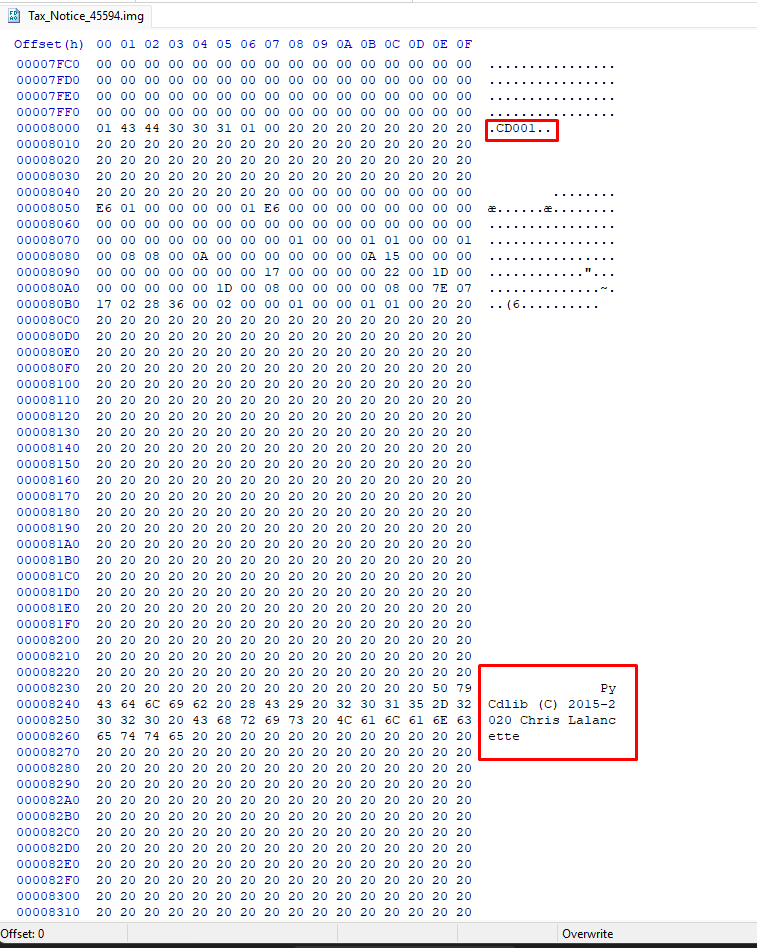
The ISO 9660 volume descriptor confirms the attachment is a disk image rather than a conventional archive.
When mounted, it holds exactly three files: “Tax_Notice_45594.exe” (not to be confused with the original Tax_Notice_45594.img), “libcurl.dll”, and “LIBCURL.DAT”. Which is where it gets fun.
The Sideload
By running DIE across the three payload files, a toolchain mismatch tells the whole story straight away. The EXE is MSVC 2022 (19.36.33811) and Authenticode-signed; the DLL sitting next to it is a MinGW/GNU-ld (Binutils 2.38) build. A real libcurl.dll shipped alongside a Microsoft-signed app would not be a 10 KB GCC artifact.

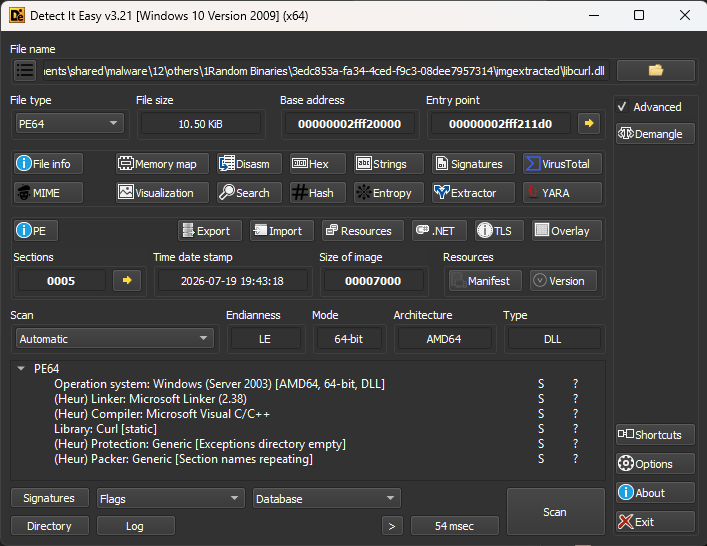
Toolchain differences between the signed executable and neighbouring DLL immediately suggest sideloading activity.
The “malware” EXE is a legitimately signed Notepad++ binary. The attacker didn’t trojanize it – they renamed it to Tax_Notice_45594.exe and dropped it as a launcher. This is a good example of why defenders should be cautious about treating signed binaries as inherently trustworthy. Nothing about the Notepad++ executable itself is malicious. Instead, the trust associated with the signed binary is being borrowed by a neighbouring DLL. Notepad++ uses libcurl.dll for its plugin-admin/updater, so it will happily load a libcurl.dll from its own directory. That’s the hook.
The EXE imports four functions from libcurl.dll – `curl_easy_setopt`, `curl_easy_cleanup`, `curl_easy_init`, `curl_easy_perform` – and the malicious DLL exports exactly those four and nothing else. This is a clear indication of DLL Proxying, where the loader re-exports the precise API surface the host asks for, so Notepad++ resolves its imports, runs, and looks completely normal to the user while the DLL does its business on the side.
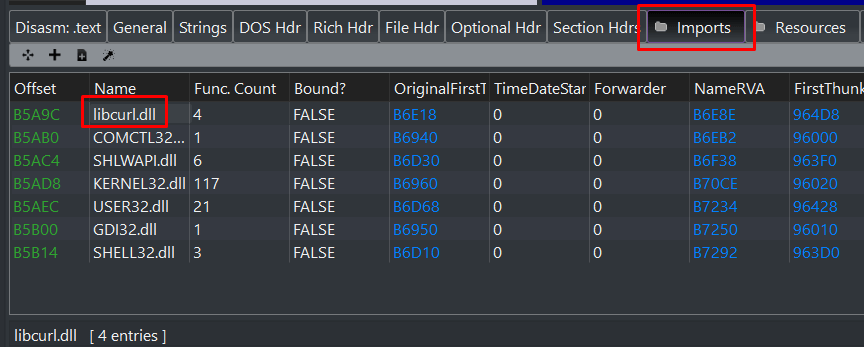
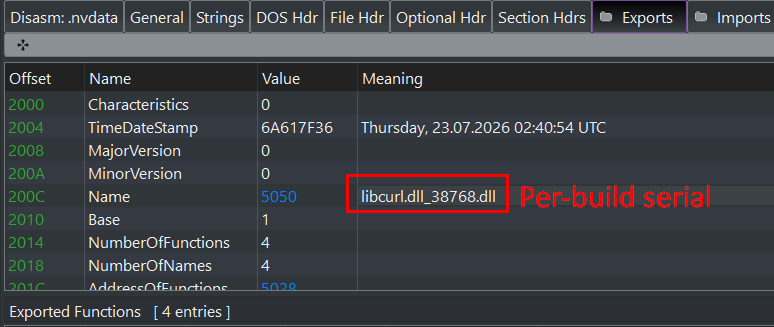
The proxy DLL exports only the functions required by the renamed Notepad++ executable.
Inside the loader
The first IDA surprise is that the section table is a lie. Every section has been deliberately named to suggest it contains something else entirely.
That’s interesting because most malware doesn’t need to defeat analysts in this way. Commodity loaders generally assume they’ll only ever be inspected briefly, if at all. The author has spent a lot of effort actively degrading the analyst experience, which suggests they expect defenders to take a closer look. It’s a small change technically but a very useful indicator of intent.
| Section | What it actually holds |
| .nvdata | The real .text |
| .nvdata | The real .data |
| .nvtext | The real .rdata |
| .nvdata | The real .edata |
| .pdata | The real .idata |
The .nvtext/.nvdata swap is the obvious one: if your disassembler only disassembles sections named .text, it finds nothing, because the code is in the section called .nvdata and .nvtext is read-only data.
Alongside this, .pdata is a trap for reversers, there is no exception directory in this binary at all. The section named .pdata is the import table. Any disassembler that takes apart this binary will essentially output garbage.
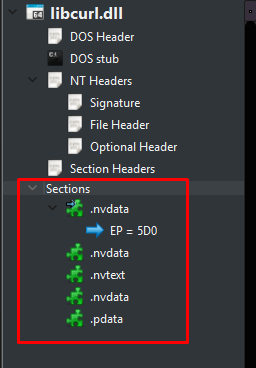
Misleading section names are used to complicate static analysis and reverse engineering.
Once IDA is pointed at the right section, there are only 57 functions to analyse, these are the main ones:
- `loader_DllMain` – everything happens here on DLL_PROCESS_ATTACH before Notepad++ ever calls the first curl_easy_* function
- `apc_run_payload` – the APC callback that eventually executes the decrypted shellcode
- `installer_thread` – establishes persistence through Registry Key edits
- `is_admin` – Self-explanatory
- `elevation_watchdog` – background loop that keeps popping UAC until it wins.
What makes this loader interesting is that much of its execution logic is concentrated into a single function. Rather than spreading responsibility across dozens of components, privilege checks, persistence, anti-analysis routines, payload decryption, and shellcode execution are orchestrated from a single control path.
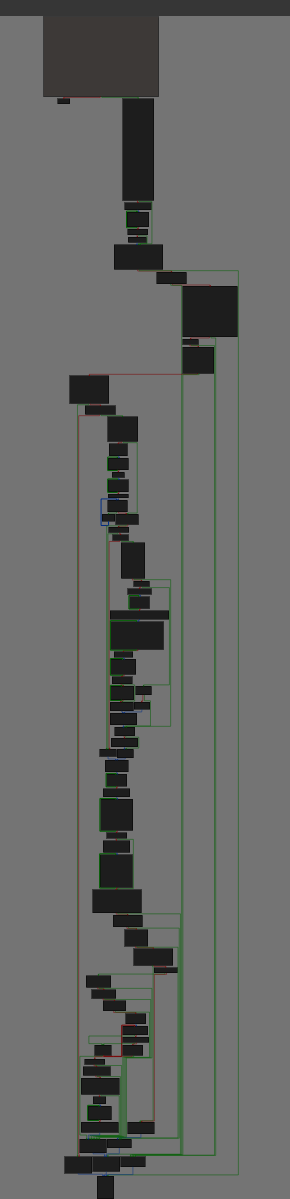
High-level control flow showing how the loader progresses from initial execution through anti-analysis checks, persistence, and ultimately payload execution.
The loader’s decision point
`apc_run_payload` at `0x2fff21a10` is what actually runs the decrypted blob.
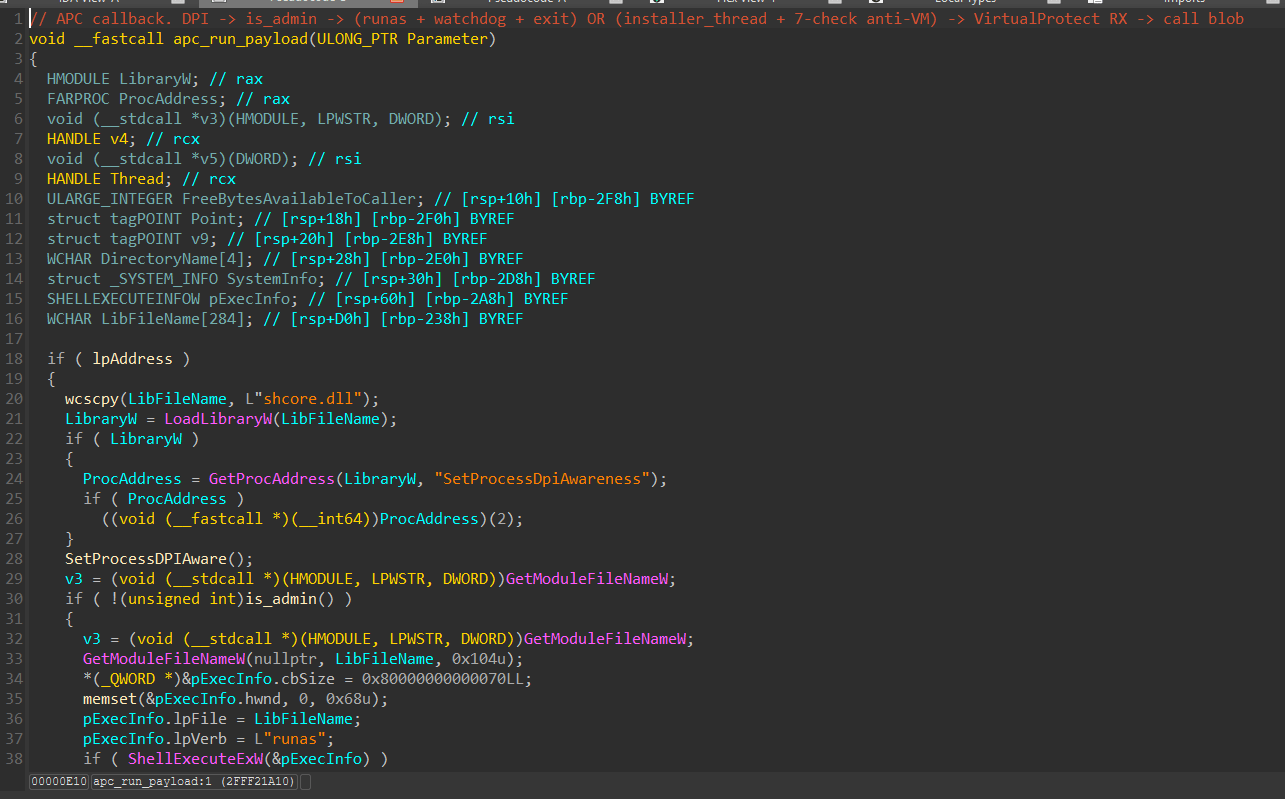
The APC callback is responsible for executing the decrypted payload in memory.
| Check | Constant | Fails if |
| CPU cores | <= 1 | Single-core |
| Physical RAM | <= 0xFFFFFFFF | < 4GB |
| Free disk on C: | <= 0xEFFFFFFFF | < ~60GB |
| Uptime | cmp rax, 0x927BF | < 10 min |
| Cursor moved over 3s | GetCursorPos (x2) | Didn’t move |
| Screen resolution | cmp eax, 0x3FF / 0x2FF | < 1024×768 |
| Last user input | cmp eax, 0x493E0 | None in 5 min |
Payload Decryption & Shellcode Recovery
The whole custom cipher fits into one Python script. The last 26 bytes of the file are a parameter block:
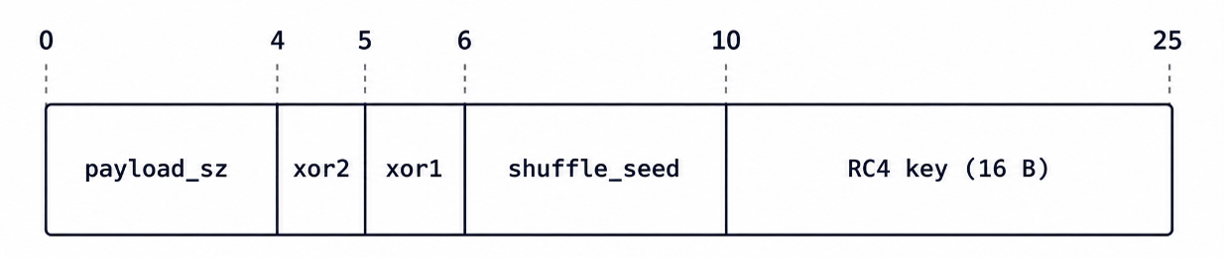
The final bytes of LIBCURL.DAT contain the parameters required for payload decryption.
Then three passes over the body – `^= xor1`, bitwise NOT, `^= xor2`followed by a DWORD level Fisher–Yates de-shuffle and finally RC4 with the 16-byte key applied. The de-shuffle PRNG is a bog-standard LCG, and it’s all sitting in the disassembly in plain sight:
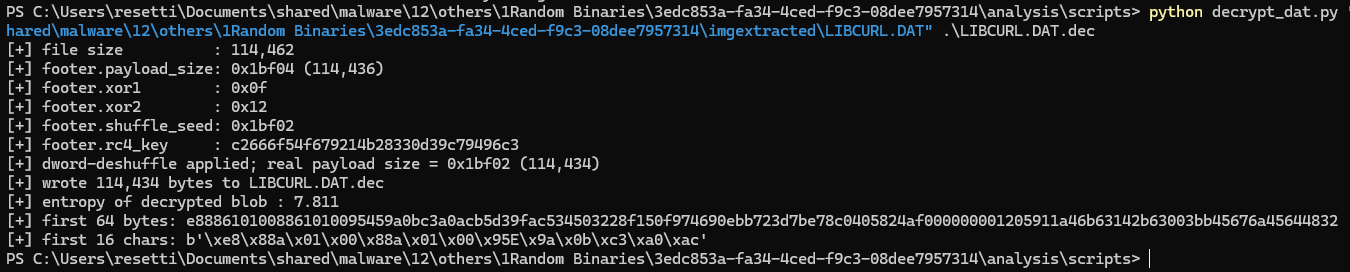
Decrypting LIBCURL.DAT reveals an additional encrypted execution stage.
The interesting part is that the “shuffle seed” isn’t a seed at all, it’s the plaintext length. 0x1BF02 = 114,434 is the exact size of the decrypted output.
Entropy after decryption is still 7.811, which is a red flag that we haven’t hit the final stage, so I looked at the file in HxD and found what looked like shellcode:
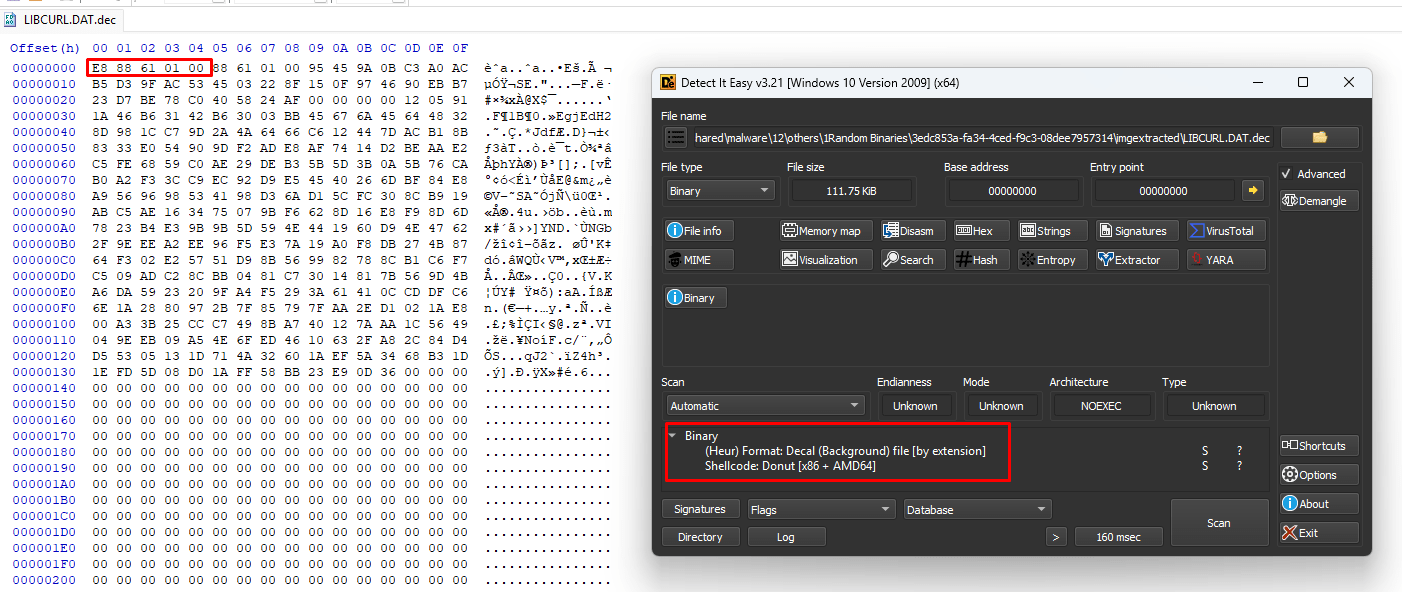
Persistent high entropy indicates further packing or shellcode-based execution.
Splitting the blob by entropy, and the layout reveals itself, the first 90KB is an encrypted blob, and the last 24KB looks like a stub at the end. The initial CALL pushes the address of the encrypted blob onto the stack, then the stub starts with `pop rcx` to grab it.
Structurally this looks like Donut loader, an open-source tool that can generate position-independent shellcode that loads anything from .NET assemblies to PE files into memory and then executes them.
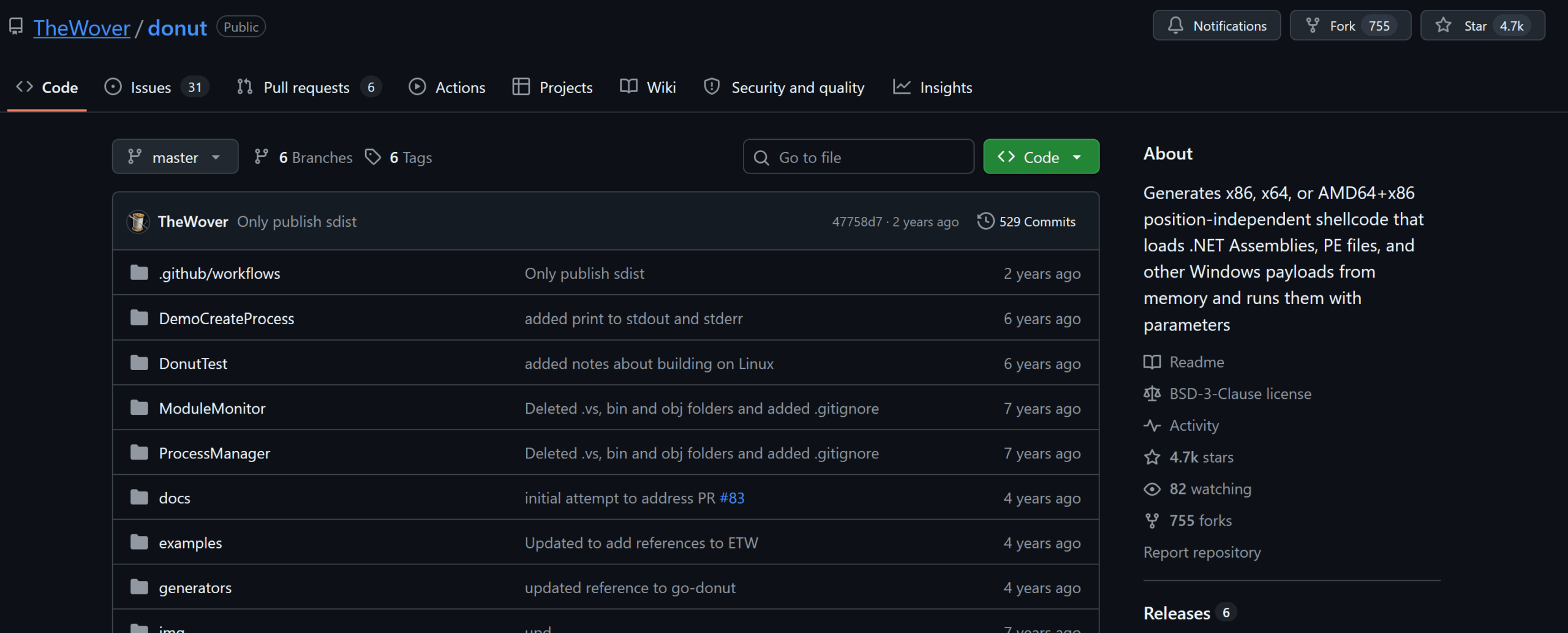
The recovered shellcode shares characteristics with the open-source Donut loader framework.
The Donut Layer
The stub at 0x1618d opens with a textbook PEB walk: `gs:[0x60]` for the PEB, `+0x18` for `PEB.Ldr`, `+0x10` for the module list, then `+0x30` for `DllBase`. That’s the exact prologue at the top of every Donut PIC.
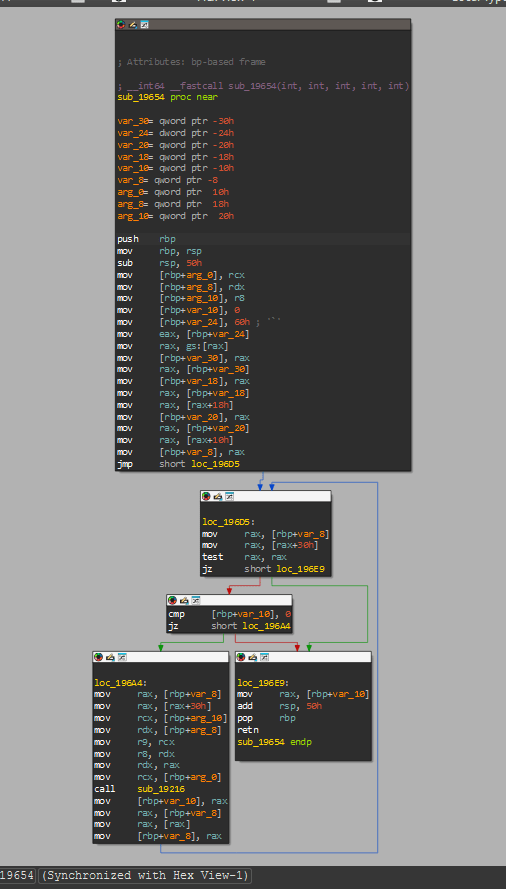
A textbook PEB walk helps identify the payload as Donut-generated shellcode.
We used an open source tool to decrypt the Donut shellcode: https://github.com/volexity/donut-decryptor
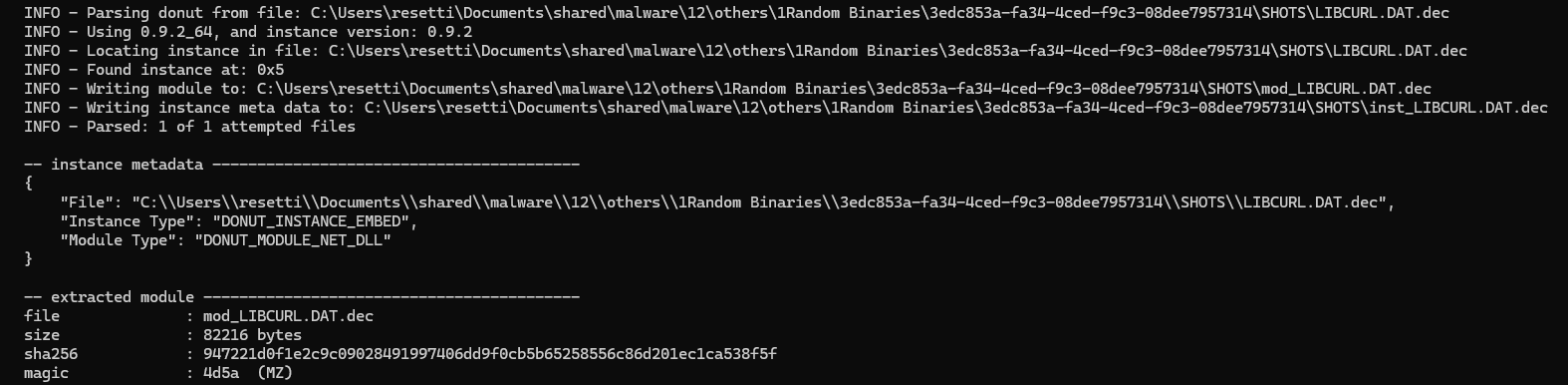
Using Donut-specific tooling exposes the underlying .NET payload.
The `MODULE_NET_DLL` indicates to us that this is a .NET DLL, reflectively loaded into the process. The binary is 82KB and the namespace layout is very similar to the ASyncRAT/Quasar malware family.
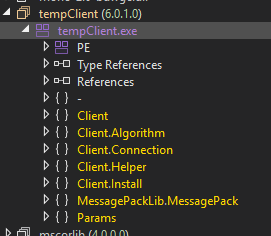
The recovered namespace structure resembles the ASyncRAT and Quasar malware families.
Final Payload: VenomRAT
We can tell the difference between this being an ASyncRAT/Quasar payload and pin it to VenomRAT specifically due to a few indicators:
- `Client.Helper.DInvokeCore` + `Delegates.NtProtectVirtualMemory` – VenomRAT ships D/Invoke for hooked-API bypass
- `Client.Helper.ProcessCritical` – calls `RtlSetProcessIsCritical`, so killing the process BSODs the box
- `Client.Program.StopHVNC` – kills `cvtres` processes, VenomRAT’s HVNC worker name
- `Client.Algorithm.Aes256.Salt = Encoding.ASCII.GetBytes(“VenomRATByVenom”)` – the literal PBKDF2 salt string, checked in from the builder repo
DetectItEasy also detects it instantly after decryption:
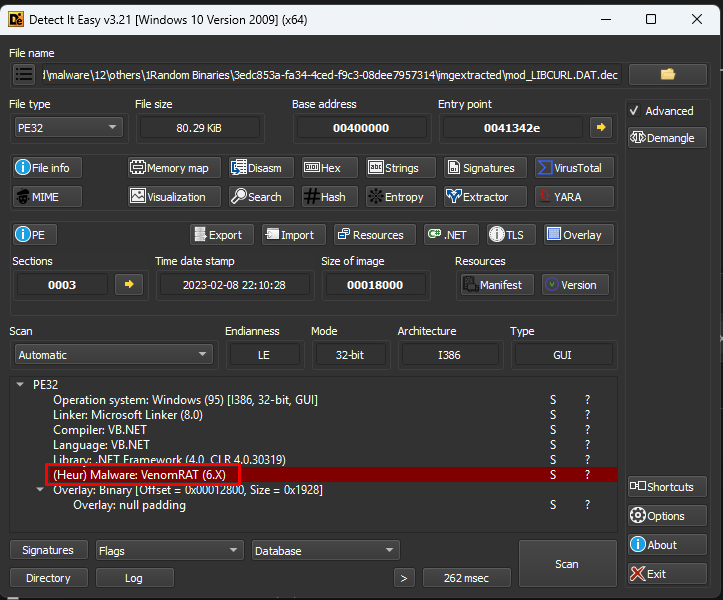
Post-decryption analysis identifies the payload as VenomRAT.
The process to decrypt the VenomRAT config is well known, so we won’t go through it here, the master key is `pYkMMX7nP7idsNYX2UZF4GQmQG26h2cV` and the derived AES key is `e55cf0745105d264db810ffc87a6f65f88686cb476498f081abb35c06383df13`, using this information with a quick Python script, we get the decrypted config:
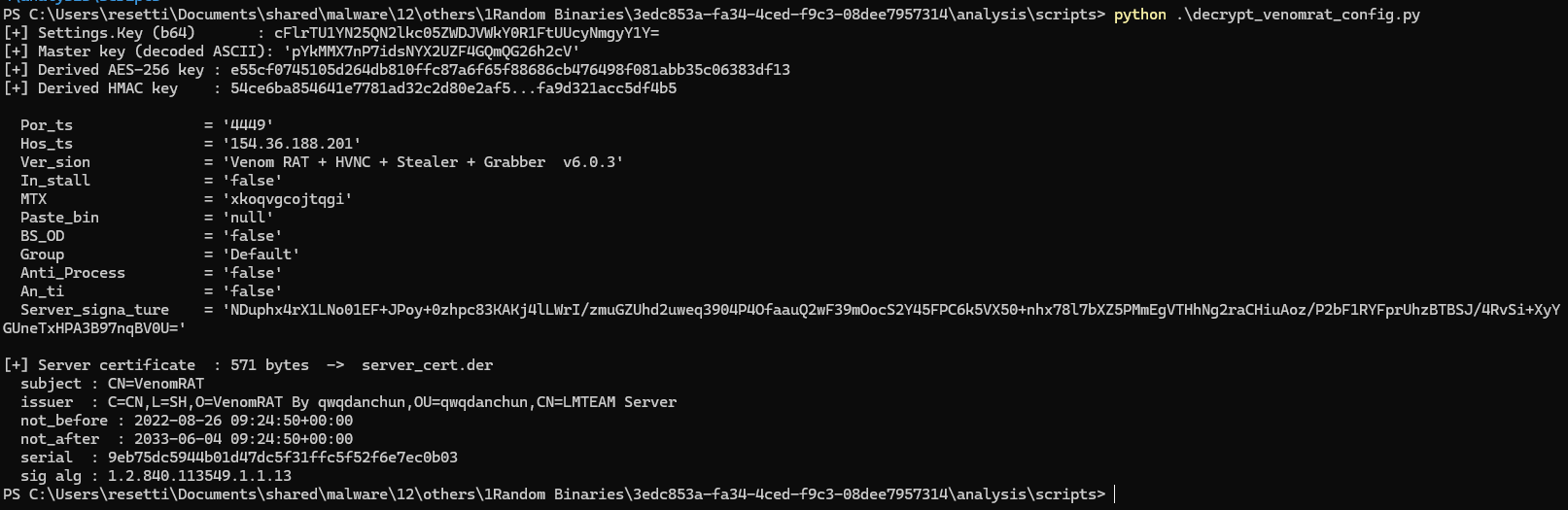
Decrypting the configuration reveals hard-coded command-and-control details and campaign metadata.
| Field | Value |
| Hos_ts | 154.36.188.201 |
| Por_ts | 4449 |
| Ver_sion | Venom RAT + HVNC + Stealer + Grabber v6.0.3 |
| MTX | xkoqvgcojtqgi |
| Group | Default |
| In_stall / BS_OD / An_ti / Anti_Process | false |
| Paste_bin | null |
(Note the version banner has two spaces before v6.0.3 – matters if you’re grepping for it.)
Every anti-analysis/install/process-kill toggle is false. The RAT config is stripped because the loader stage already ran anti-VM, established persistence, and elevated. The crypter handles evasion + install, VenomRAT handles C2 + capabilities.
And the version banner is an indicator too: that’s the builder banner from the “qwqdanchun” redistribution of VenomRAT on GitHub.
Beyond the Initial Sample
Static analysis stopped at the C2. The next question was whether that C2 leads back to a named actor. Short answer is almost. The chain slots neatly into a well-documented China-nexus playbook targeting Indian tax entities this season, but the specific tools don’t match any single named group’s arsenal, so this is a cluster-adjacent attribution.
The most productive pivot was the VenomRAT builder cert (SHA1 009a05eaf082d20ae13a65abda12afd959cd76de). Feeding that thumbprint to VT Intelligence returned five siblings – three ISO loaders (Tax_Notice_16695.img, ITDENF2026-4281.img, Tax_436454367.img), one loose VenomRAT payload, and one 2023 outlier.
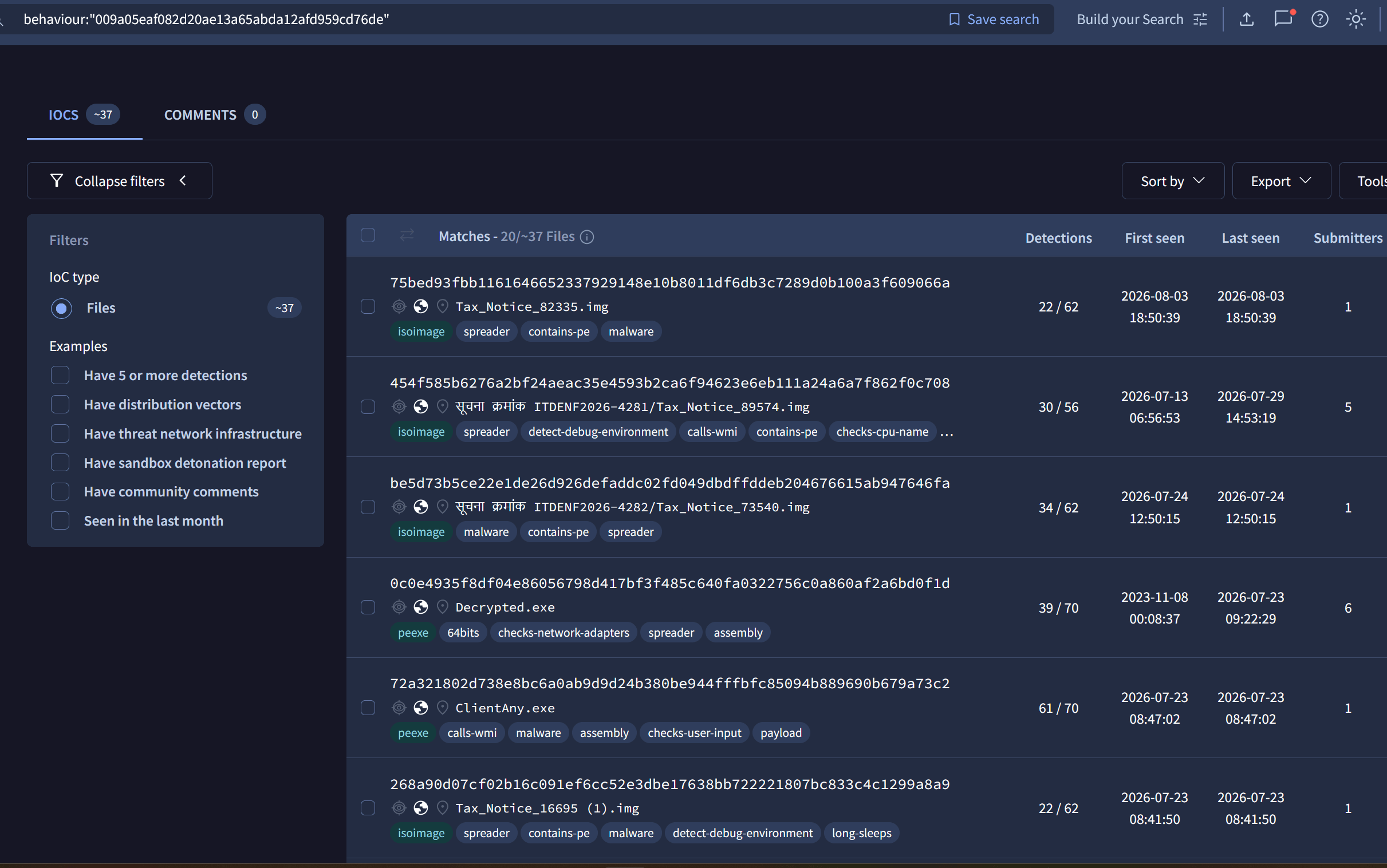
Pivoting on the builder certificate uncovers additional related samples and infrastructure.
All three ISOs landed on VT the same day as mine, probably several people pulling the link on the same day. The 2023 sibling is useful, because it’s Chinese (“November payment, please check receipt [PC version]”): the same qwqdanchun builder has been in service across Chinese-language crimeware since at least late 2023.
Pivoting on the C2 IP 154.36.188.201 turned up two more Tax_Notice_*.img samples, and the passive-DNS history is unambiguous – the IP has hosted Chinese sites since 2021 (1.ccew.cc, 0769mybj.com, 3158mz.com; “0769” is Dongguan’s area code). A Chinese VPS reused for VenomRAT C2.
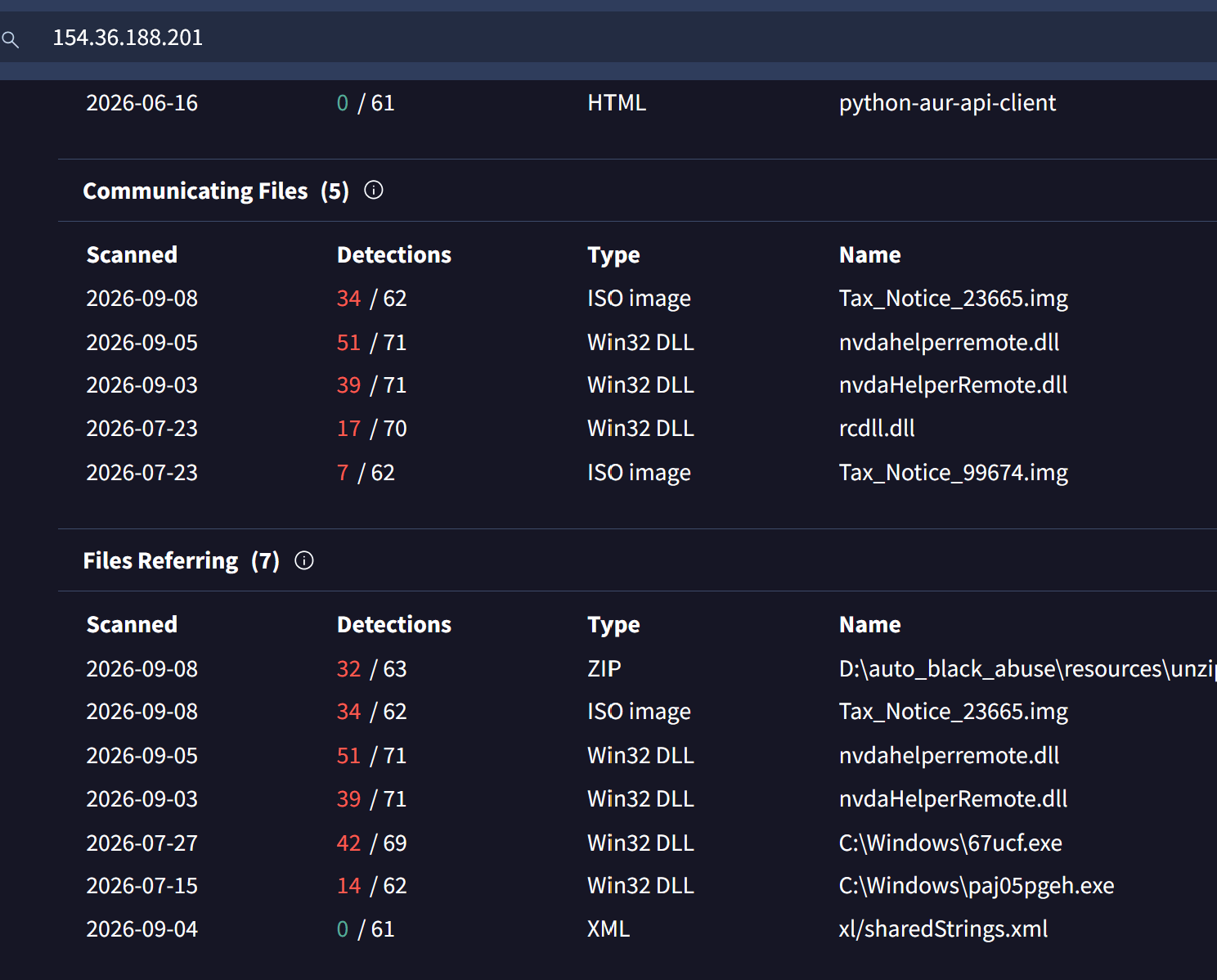
Additional samples were identified through infrastructure associated with the campaign’s command-and-control server.
Silver Fox? Where Does PAPERMILL Fit?
This is where attribution becomes frustrating. Technically, we have a well-understood chain. We know how execution occurs, we know how the payload is protected, and we know where command-and-control communication will eventually land. What we don’t have is the evidential bridge between infrastructure and a confidently attributed threat actor.
This is an increasingly common situation in modern malware analysis. Operators frequently share tooling, borrow builders, reuse loaders, and copy tradecraft from one another. As a result, understanding what happened is often significantly easier than proving who did it. In this case, the campaign sits close enough to known activity to be interesting, but not close enough to make a defensible attribution claim
Public reporting on tax-notice DLL-sideload campaigns is dense and converges on one broad cluster. Silver Fox (also tracked as SwimSnake / UTG-Q-1000 / Void Arachne / “Valley Thief”), a China-nexus cybercrime group active since 2022 is a likely connection here. Seqrite/Mallory attributed a look-alike sample (Tax_Assessment.exe + libsvcs.dll > XWorm/DcRAT) to Silver Fox with medium-to-high confidence, and CYFIRMA’s Operation DragonReturn (May-Jul 2026) tracked the same class of activity with possible overlap.
So: is this sample Silver Fox, a splinter, or a separate opportunist riding the same wave?
| Element | Silver Fox (documented) | This sample |
| Sideload host | thunder.exe (Xunlei download manager) | Notepad++ GUP.exe |
| Sideload DLL | libexpat.dll | libcurl.dll |
| Container | .zip + NSIS installer, or .vhdx | .img ISO9660 built with pycdlib |
| Middle stage | Direct memory injection / explorer.exe hollow | Donut 0.9.2 x64 PIC loader |
| Final stage | ValleyRAT / Winos 4.0 | VenomRAT v6.0.3 (qwqdanchun/LMTEAM build) |
| Delivery domains | ggwk.cc, govtop.one, harivo.vip, kjfuwyce.love | dsfgssd.uk.cc, dgdskfds.uk.cc, .xin cluster |
| C2 | 223.26.63.40, 103.97.131.179, 103.231.12.27 | 154.36.188.201:4449, 103.119.15.189 |
Every row is different. The class of activity (India ITD lure + container-based MOTW bypass + DLL sideload + in-memory .NET RAT + Chinese-nexus infrastructure) is a Silver Fox family fingerprint, but the specific implementation is a variant, not a repetition.
Our best-supported call, in decreasing order of confidence:
- China-nexus, financially-motivated commodity crimeware, targeting Indian entities with High confidence. Chinese bulk mailer, Chinese-preferred registrar, Chinese-hosted C2 with a five-year history of Chinese resolutions, Shanghai-authored VenomRAT builder, and a builder cert previously seen in a Chinese-language finance phish. Every third-party control-plane touch point in this operation is Chinese-language-native.
- Silver Fox-adjacent / same tax-lure playbook with Moderate-to-high confidence. Silver Fox’s canonical India campaign uses the “कर लेखापरीक्षा” (Tax Audit) lure theme, a direct match to this subject line. The whole delivery-and-loading class matches; only the specific tools are substituted.
- Silver Fox splinter or post-arrest successor with Moderate confidence. A substitute stack, VenomRAT via a public builder, a different sideload pair, is exactly the shift a surviving operator would make after the 2025 arrests, and the 5-month gap since the last documented Silver Fox India wave fits reconstitution. This is supported fairly-well by pattern, but unfortunately not provable from static analysis.
- Independent opportunist riding the wave with Low-to-moderate confidence. This stack is all public and commodity, technically, any Chinese-language operator could set it up. The mailer slips ({{seq}}, and the localhost beacon), suggest someone running a rented toolkit rather than a development shop.
We have dubbed this cluster PAPERMILL, because a lot of the stages to this campaign are generated by pre-made builder tools, like for example, the final VenomRAT payload. The actors simply just have to churn out new payloads for new campaigns.
The honest takeaway is that this is broadly Silver Fox-like activity. However, we cannot yet confidently attribute it to a specific actor, and so we are assigning the cluster a new designation. Whether this represents a splinter group, a successor operation, or an entirely separate actor drawing from the same ecosystem remains unclear. We will continue tracking related activity as it emerges and hope the indicators and analysis presented here help others further develop the picture.
Conclusion
The chain hides five layers deep behind a legitimately signed binary the operator did not modify by a single byte, and every layer does exactly one job, but the interesting thing in this campaign in my opinion is the timestamp. Two numbers three days apart in a PE header led to the ISO’s creation date matching the DLL’s export directory to the second, which proved the container is minted per download, three of the five file hashes I’d have happily handed a client as an IOC package are unique to my own fetch and would never have matched a second victim.
The builder in this campaign is what wins in a sense, hash-based detection loses by default against it. Since everything is unique, therefore, the cert thumbprint, the behaviour, and detection engineering like YARA rules are what survive.
Indicators of Compromise
| Email / delivery | |
| Type | Indicator |
| Sender address / DKIM domain | dfgfasd@hsaui[.]cc |
| Sending IP | 155.94.154.195 |
| Sending MTA (HELO/PTR) | mos1.17dlz[.]cn |
| Bulk-mailer auth host | smtp.smtpman[.]cn |
| Payload/landing URL | hxxps://dsfgssd[.]uk[.]cc/ → hxxps://dsfgssd[.]uk[.]cc/download[.]php |
| Tracking-beacon path | /api/mailer/open?task=<GUID>&t=<token> (host left as localhost:6688) |
| Lure subject | कर लेखापरीक्षा परिणाम No. ITD/SCNU/2026-<seq> |
| Mailer tell | unrendered {{seq}} in From display name |
Malicious File Hashes
| File | SHA256 |
| Tax_Notice_45594.img (ISO container) | f945b3f2f29d62099683cbbf069ed5bc952d089c16a85fb314ac8fe0f0c10d2b |
| Tax_Notice_45594.exe (signed Notepad++ launcher) | fe0ddd8686324e0a8b07ed5ffdb4f56397c70b1b5a19d2916c8eb192583f950c |
| libcurl.dll (proxy loader) | 8c1ba078598e09294d72293a42dcd878e183b6e5a207315f7bf6ef74a966cbb5 |
| LIBCURL.DAT (encrypted payload) | 2ff898c1a4bb0dd48687bbbc8cca646a896dc9ed24780a49523dfbf9fb94a4ec |
| stage2.dll (VenomRAT .NET DLL, post-Donut) | 947221d0f1e2c9c09028491997406dd9f0cb5b65258556c86d201ec1ca538f5f |
| Host / behavioral | |
| Type | Indicator |
| Install directory | %APPDATA%\Microsoft\Crypto\RuntimeBroker\ |
| VenomRAT runtime dir | %APPDATA%\MyData\ |
| Dropped files (loader) | RuntimeBroker.exe, libcurl.dll, libcurl.dat |
| Staging temp names | *_dbg_src.tmp, *_dbg_dst.tmp |
| Persistence key | HKCU\Software\Microsoft\Windows\CurrentVersion\RunOnce → …\RuntimeBroker\RuntimeBroker.exe |
| Masquerade | RuntimeBroker.exe (impersonates Windows Runtime Broker) |
| Internal DLL name | libcurl.dll_38768.dll — hunt the pattern libcurl.dll_<digits>.dll, the number is per-build |
| Loader module base (memory) | maps at exactly 0x00000002FFF20000 (no relocations) inside GUP.exe / RuntimeBroker.exe |
| Loader section names | .nvdata ×3, .nvtext, .pdata — no exception directory despite the .pdata name |
| VenomRAT mutex | xkoqvgcojtqgi |
| VenomRAT HVNC worker | Kills any cvtres.exe process on reconnect |
| VenomRAT anti-kill | RtlSetProcessIsCritical(TRUE) — BSODs on kill if BS_OD=true (off in this build) |
| C2 / network | |
| Type | Indicator |
| C2 endpoint | 154.36.188.201:4449 |
| VenomRAT campaign group | Default |
| VenomRAT master key (b64) | cFlrTU1YN25QN2lkc05ZWDJVWkY0R1FtUUcyNmgyY1Y= → ASCII pYkMMX7nP7idsNYX2UZF4GQmQG26h2cV |
| PBKDF2 salt | VenomRATByVenom (50000 iters, SHA-1 HMAC) |
| Version banner | Venom RAT + HVNC + Stealer + Grabber v6.0.3 (two spaces before the version) |
| Builder attribution / pivot | |
| Type | Indicator |
| Server X.509 subject / issuer | CN=VenomRAT / C=CN, L=SH, O=VenomRAT By qwqdanchun, OU=qwqdanchun, CN=LMTEAM Server |
| SHA1 thumbprint (pivot) | 009a05eaf082d20ae13a65abda12afd959cd76de – same across every sample built with this qwqdanchun-modded v6.0.3 builder |
| SHA256 thumbprint | f72bf7c1fd132262715820d839e4874c97d927b10072fb4709a1321927fea66d |
| Sibling samples (same builder cert, uploaded 2026-07-23) | ||
| SHA256 | Filename | VT label |
| 72a321802d738e8bc6a0ab9d9d24b380be944fffbfc85094b889690b679a73c2 | ClientAny.exe / skkr3.exe | trojan.asyncrat/msil (VenomRAT) |
| 268a90d07cf02b16c091ef6cc52e3dbe17638bb722221807bc833c4c1299a8a9 | Tax_Notice_16695 (1).img | trojan.shellcode/dllhijack |
| f23708ae470904490cb25d370185ca89c0d37e33fa5a3c652e4b10e65d0b08e3 | ITDENF2026-4281.img | trojan.dllhijack/shellcode |
| d768222934f6014bf17c3d0a1ef4c35e02aa6fe1e89564e252ca5e7b7c7fe237 | Tax_436454367.img | trojan.dllhijack/shellcode |
| 0c0e4935f8df04e86056798d417bf3f485c640fa0322756c0a860af2a6bd0f1d | 11月已付款,回单请查收[电脑版].exe (2023) | trojan.msil/dinvoke |
| 38ec1f5e23f65b10ae3027beabfa0bf7f9fb686355a9e33c7e7e44e6a998e04c | Tax_Notice_23665.img (2026-07-15, contacts our C2) | trojan.shellcode/misc |
| a4098fe9ed421a6244c9fd4d3d1a632ff5f2ee4ffa204dff0587548932936d38 | Tax_Notice_99674.img (2026-07-23, contacts our C2) | trojan.misc/donut |
| Sister delivery infrastructure (July 2026 waves) | |
| Type | Indicator |
| Sister lure domain | dgdskfds[.]uk[.]cc (Cloudflare, 17 VT malicious, waves 2026-07-09→23) |
| Sister delivery hosts | aidenllc[.]com (AWS ap-south-1), gov-xnui[.]com, xjxfxn[.]com (Tencent HK), jfbcea[.]com (BGPNET SC) |
| .xin DGA cluster (SG) | tzawccsw[.]xin, zxizusuy[.]xin, zasudtytw[.]xin, zixhasda[.]xin, pzisiauywa[.]xin, gisudyawz[.]ink — all resolve to 103.23.172.15 |
| Sister lure title | कर दंड सूचना – भारत सरकार (“Tax Penalty Notice — Government of India”) |
| Secondary C2 IP (sibling) | 103.119.15.189 (Turing Group AS140869) |
| Related NEET-phish cert | ekl1-neettr[.]bond on sender IP 155.94.154.195 |
Contributors
Jack Lewis
Threat Research & Analysis
Sean Moran
Editorial Review
Dhaval Mukeshkumar
Sample Discovery & Initial Investigation
The intelligence presented in this report originated from the detection of previously undocumented malware by JUMPSEC’s MXDR team. The sample was initially identified and investigated by Dhaval Mukeshkumar before being escalated for deeper threat research and analysis. Further information on JUMPSEC’s incident response, incident exercising, and detection and response services is provided below.

Jack Lewis
Research & Analysis
Jack is a security researcher with a strong focus on malware analysis, tracking new threat actors and campaigns, reverse engineering, patch diffing, and proactive threat hunting.